

The Engineer’s Checklist for Sourcing Custom Plastic Injection Molding Solutions
Quick answer: An engineer sourcing custom plastic injection molding should qualify the supplier against evidence at each stage of the program, not against a sales presentation. The essential checks are:
- a complete requirements package before quoting
- a written design-for-manufacturability (DFM) review with mold-flow evidence
- a defined mold specification covering steel, mold class, runner system and cooling
- controlled material handling with lot traceability
- a documented process window rather than a single “golden” setting
- measured first-article and capability data on critical dimensions
- written rules for tool ownership, maintenance and engineering change control
A supplier that can show evidence at each gate is lower risk than one with a lower piece price but no data.
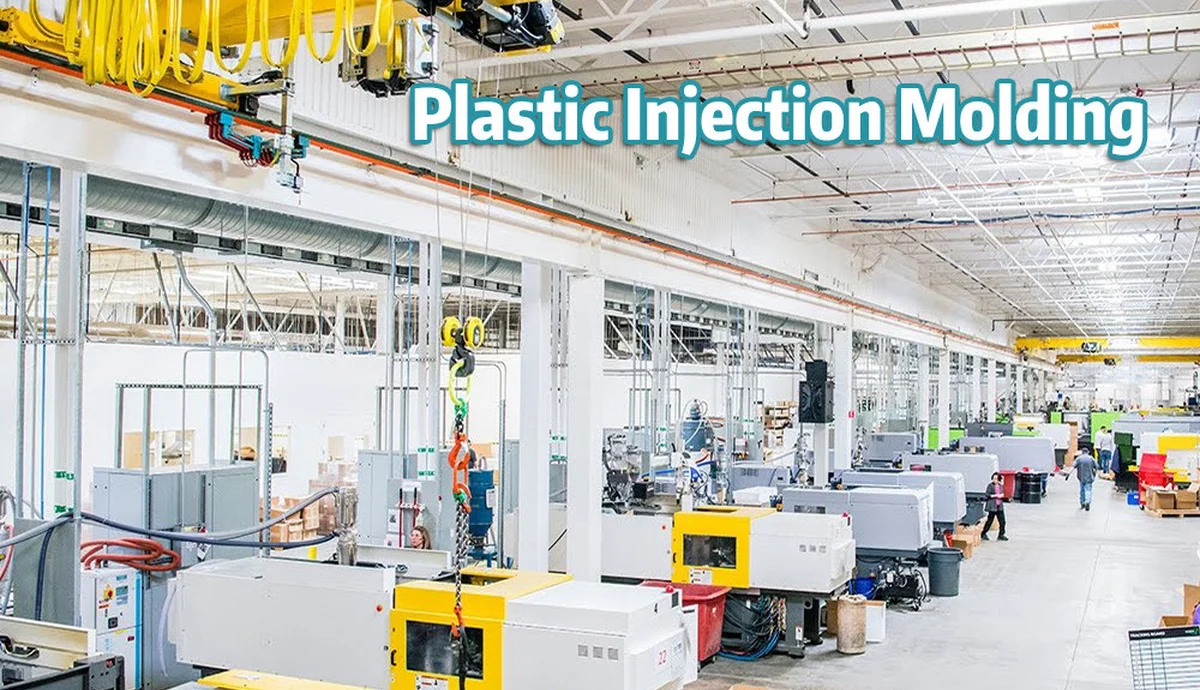
How to use this checklist: the sections follow a program from RFQ to production release. Each one states what to ask for, what good evidence looks like and the warning signs to watch for. For background on the process itself, see the basics of plastic injection molding.
Why should engineers use a stage-gated checklist instead of a supplier scorecard?
Most injection molding problems originate in decisions made before the first part is molded. They come from part geometry, gate location, steel choice, cooling layout and tolerance allocation, so a single supplier visit or capability brochure cannot reveal them. A stage-gated checklist ties each sourcing decision to evidence produced at that stage: the DFM report before steel is cut, the mold design review before machining, T1 sample data before texture and polish, and capability studies before production release. Problems are found while they are still cheap to fix.
A traditional supplier scorecard still has value for comparing companies on quality certification, capacity, location and price. It cannot show whether a specific mold for a specific part will run a stable process. Engineers get the best result by using a scorecard to build the shortlist and the stage-gated checklist to qualify the program.
What must the requirements package contain before requesting quotes?
Quotes can only be compared when every supplier prices the same requirements. A complete package for custom injection molding includes:
- a released 3D model and 2D drawing with revision levels
- the material by grade (not just by family) and any approved alternates
- colour and cosmetic standards, including surface finish or texture and the class of each surface
- critical-to-function dimensions marked on the drawing
- annual volume, batch size and expected program life
- regulatory requirements, for example food contact, UL flammability, RoHS/REACH or medical biocompatibility
- packaging and labelling requirements
The package should also state what the supplier is expected to deliver. That means the number of cavities or a target cost and cycle, the expected mold life, the inspection documentation, the sample quantity and the acceptance criteria. Missing assumptions are the main reason that two quotes for the “same” part can differ by a factor of two, and the main source of change orders after award. The site’s guide to getting an injection molding quote covers the commercial side of this step.
How should tolerances and critical dimensions be specified for molded parts?
Tolerances should reflect what the function needs and what the process can hold. A tolerance tighter than necessary raises tooling cost, slows cycle time and increases scrap. A tolerance block copied from machined-part drawings is a common cause of this. Molded-part tolerance depends on the material’s shrinkage, wall thickness, the size of the feature, whether the feature crosses the parting line, and the number of cavities. Standards such as ISO 20457 give guidance on achievable tolerances for molded plastic parts.
Good practice is to identify a small number of critical-to-function (CTF) dimensions. Define them with datums that match how the part is assembled, and allow general tolerances elsewhere. Ask each supplier to state, in the DFM report, which tolerances it can hold with capability, which need steel-safe tuning after first samples, and which need a design change. A supplier that accepts every tolerance without comment has usually not reviewed the drawing in detail.
| Tolerance situation | Typical risk | What to ask the supplier |
|---|---|---|
| Dimension across the parting line | Variation from mold closing and flash | Can the feature be moved into one mold half? |
| Long, flat or thin-walled part | Warpage beyond flatness tolerance | What do the warpage simulation and rib strategy show? |
| Semi-crystalline resin (PP, PA, POM) | Higher and direction-dependent shrinkage | Which shrink factor and steel-safe strategy will be used? |
| Multi-cavity mold | Cavity-to-cavity variation | Will each cavity be measured and reported separately? |
What should a credible DFM review include?
A credible design-for-manufacturability review is a written document that identifies specific risks on the specific part and proposes specific changes. It should cover:
- wall thickness uniformity
- draft angles on every vertical face, including textured faces, which need more draft
- ribs and bosses relative to the nominal wall, to avoid sink marks
- undercuts and the slides or lifters needed to release them
- gate type and location
- ejector pin locations and their cosmetic impact
- the parting line position
- expected weld-line locations
Each issue should come with a recommendation and a statement of who decides.
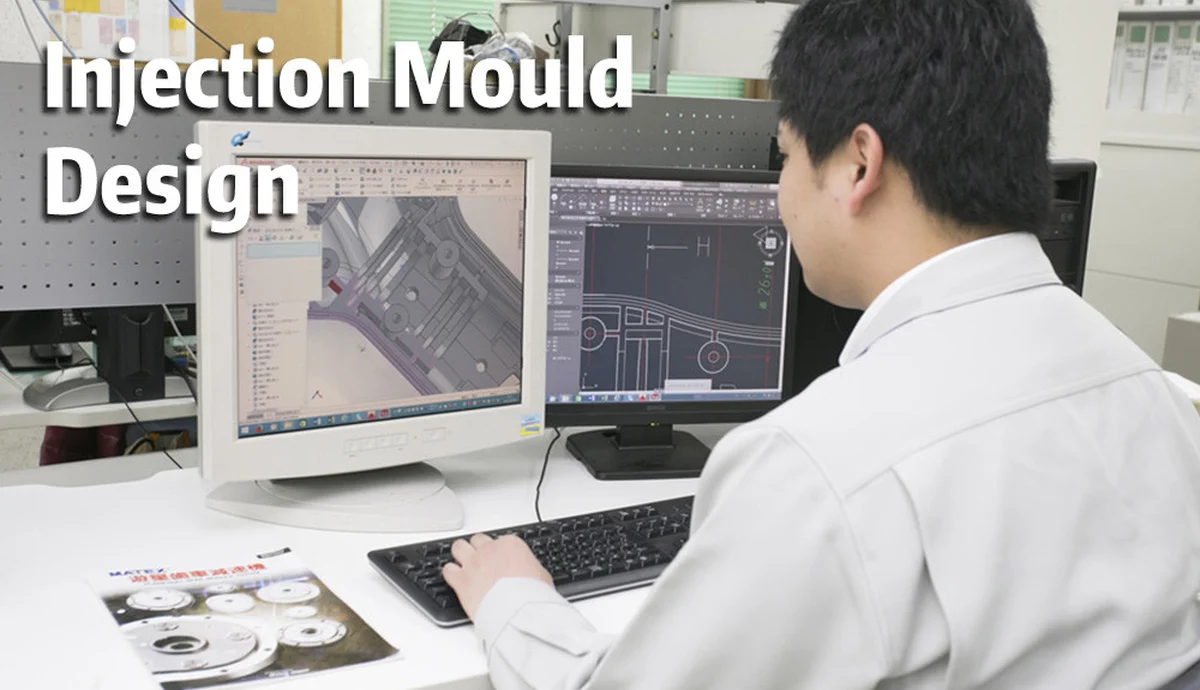
For parts with tight tolerances, long flow lengths, cosmetic surfaces or multiple cavities, the DFM review should be supported by mold-flow simulation. Useful outputs include the fill pattern and short-shot risk, weld-line and air-trap locations, pressure required to fill, cooling time, and predicted warpage. Ask to see the plots, not just the conclusion. The site’s guides to injection mould design and the role of mold engineers describe what this engineering work involves.
Which mold specifications should be fixed in the purchase order?
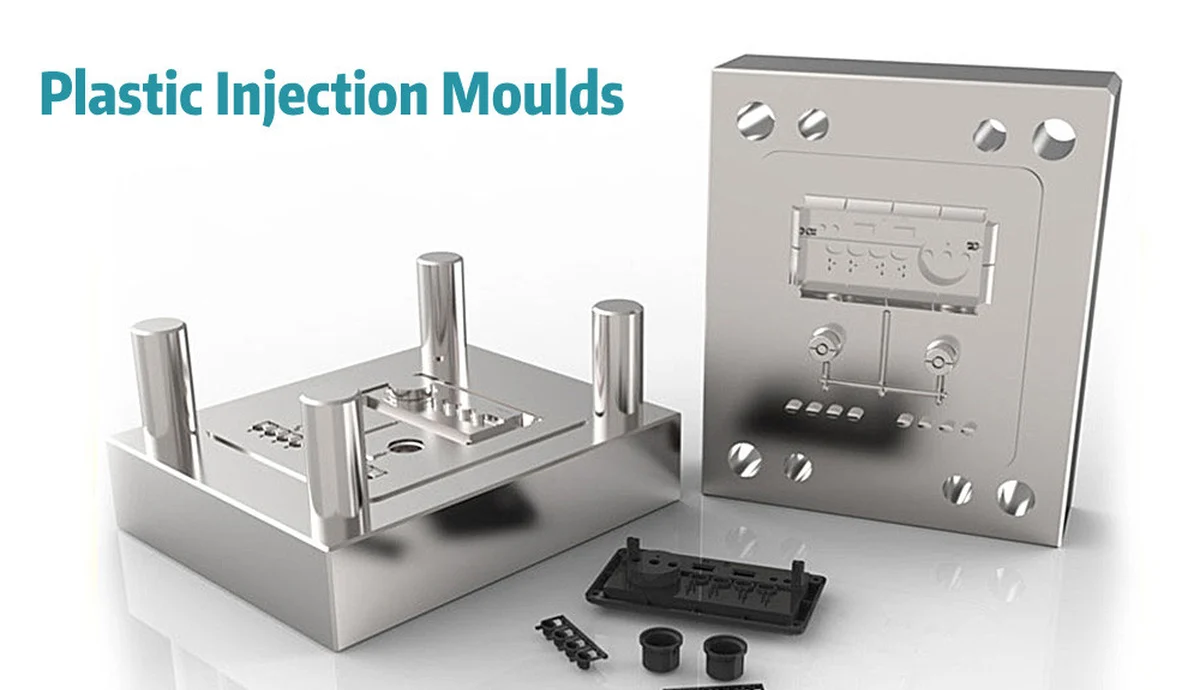
The mold is a capital asset whose life, cycle time and maintenance cost depend on choices made at the quoting stage. The purchase order should state:
- the required mold life, expressed as a mold class or shot count
- the cavity and core steel grades and hardness
- the number of cavities
- the runner system (cold runner, hot runner, or hot-to-cold)
- the cooling layout principle
- standard components, for example mold base, ejector pins and hot-runner system
- surface finish and texture specifications
- the documents to be delivered with the mold, such as 3D mold design, drawings, steel certificates, spare parts list and maintenance instructions
The common SPI mold classes give a shared vocabulary for expected life. A Class 101 mold is built for over one million cycles with hardened steel. A Class 102 mold is for medium-to-high production up to about one million cycles. A Class 103 mold targets medium production under about 500,000 cycles, often in pre-hardened steel. Classes 104 and 105 cover low-volume and prototype tools.
| Tool choice | Typical use | Trade-off |
|---|---|---|
| Pre-hardened steel (P20 type) | Medium volumes, larger molds, easier modification | Lower wear resistance with glass-filled resins |
| Hardened tool steel (H13 type) | High volumes, abrasive or glass-filled materials | Higher cost and longer lead time; changes are harder |
| Stainless mold steel (420 type) | Corrosive resins, medical and optical parts, high polish | Higher cost; lower thermal conductivity |
| Aluminium tooling | Prototypes, bridge tooling, low volumes | Limited life; less suitable for tight tolerances at volume |
| Cold runner | Lower tool cost, frequent colour changes | Runner scrap and longer cycle |
| Hot runner | High volumes, cosmetic gating, less scrap | Higher tool cost and maintenance skill required |
For a deeper look at tool build options, see injection mould manufacturing. For prototype and bridge tooling decisions, see low volume injection molding.
How should engineers verify material control at the supplier?
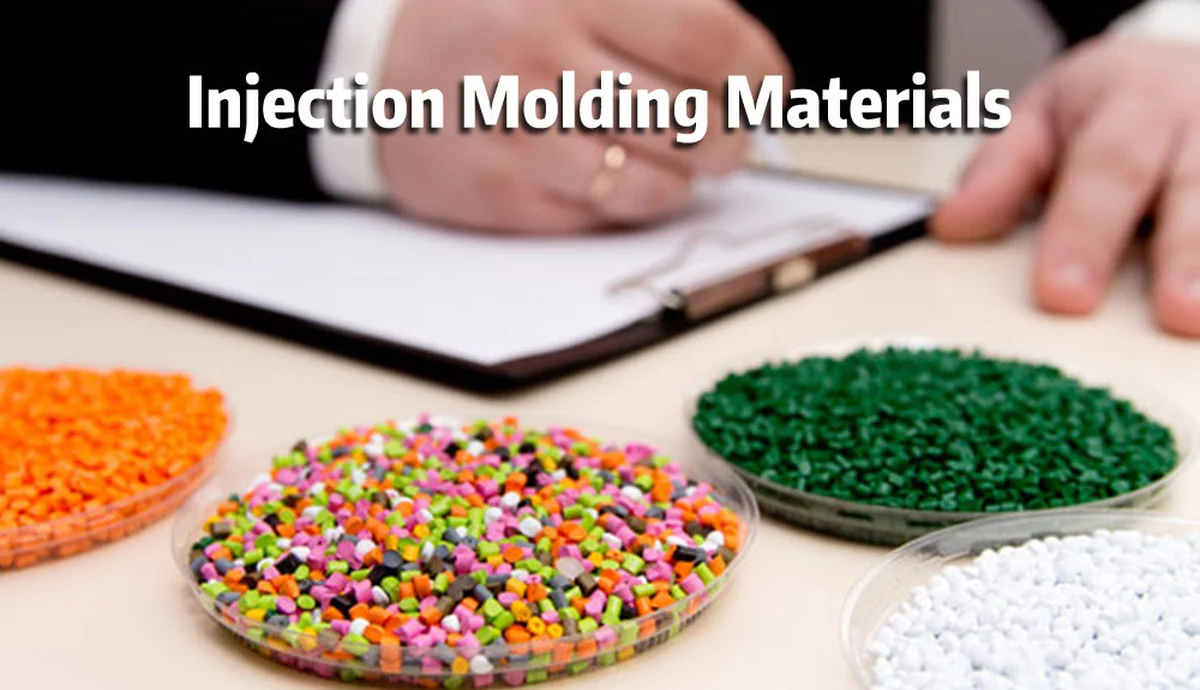
Material control determines whether part properties remain consistent from lot to lot. Engineers should confirm several points:
- The supplier buys the exact specified grade from an approved source and records the lot number for every production batch.
- Hygroscopic resins such as PA, PC, PBT and PET are dried to the resin manufacturer’s specification, with recorded drying time, temperature and, ideally, moisture checks.
- Regrind use is defined in writing, either prohibited or limited to a stated percentage with controlled handling.
- Colorant or masterbatch ratios are controlled and recorded.
Certification documents should be checked before samples, not after a compliance question arises. Examples include UL recognition for flammability-rated resins, food contact declarations, RoHS and REACH statements, and the resin supplier’s certificate of analysis. Any substitution of resin grade or supplier should require the customer’s written approval. For help with the specification itself, see how to choose plastic materials for injection molding.
What does a robust molding process look like?
A robust injection molding process is developed systematically and documented as a window, not a single machine setting. Scientific or decoupled molding practice separates fill, pack and hold, and uses studies to set each parameter. Typical studies include:
- a viscosity curve to choose injection speed
- a pressure-drop study
- a cosmetic process window
- a gate-freeze study to set hold time
- a cooling time study
The result is a process sheet with set points and tolerances that can be transferred between machines of similar capability.
Engineers should ask how the supplier selects the press. Clamp tonnage, shot size as a percentage of barrel capacity, and screw design all matter. They should also ask which parameters are monitored in production, how cushion is controlled, and what happens when a parameter drifts out of its window. A process that only works at one exact setting on one specific machine is fragile. It will cause problems when the mold is moved, the resin lot changes or the season changes. The site’s article on why molding cushion matters explains one of these monitored variables.
How should T1 samples and first-article inspection be evaluated?
First samples, often called T1, are the first objective evidence of whether the mold and process meet the drawing. A useful T1 submission includes:
- the process sheet used
- a full dimensional report on a stated number of parts from each cavity
- cosmetic evaluation against the agreed standard
- functional or assembly checks
- a list of open issues with the proposed corrective action for each
Dimensions outside tolerance should be classified by cause: steel correction, process adjustment or drawing change.
For regulated or high-consequence parts, the qualification should follow a formal framework. In automotive programs, the Production Part Approval Process (PPAP) defines the required evidence, such as process flow, PFMEA, control plan, measurement system analysis, dimensional results and capability studies. Medical device programs commonly use installation, operational and performance qualification (IQ/OQ/PQ) to validate equipment, the process window and long-run performance. Even when no framework is required, a scaled-down version gives an engineer better protection than visual approval of a few samples.
What capability and measurement evidence should be required before production release?
Capability data shows whether critical dimensions will stay within tolerance over time, not just on the parts selected for inspection. A common release requirement is a process capability index (Cpk) of at least 1.33 on critical-to-function dimensions, measured from a production-representative run. Programs with higher consequences of failure often require a preliminary capability (Ppk) of 1.67. The run should use the production mold, material lot, machine and process sheet, and report results per cavity.
Capability results are only meaningful if the measurement system is trustworthy. Ask how each critical dimension is measured, for example by CMM, vision system, height gauge or functional gauge. Ask whether a gauge repeatability and reproducibility (GR&R) study has been done. A GR&R below 10% of tolerance is generally considered good, and 10–30% may be acceptable depending on the application. Measurement fixtures should hold the part the way it is assembled, because flexible molded parts can measure differently when constrained. See the site’s quality control system page for the inspection approach.
Who owns the mold, and how is it maintained?
Tool ownership and maintenance terms protect the customer’s investment and its ability to move production if needed. The purchase agreement should state that the customer owns the mold once tooling is paid. It should also cover:
- the right to remove the mold, with reasonable notice
- the documents that transfer with it
- how the mold is identified and stored
- insurance responsibility while the mold is at the supplier
Maintenance terms should cover preventive maintenance intervals (usually by shot count), who pays for wear items and repairs, how long records are kept, and when refurbishment or a replacement insert becomes the customer’s cost. A supplier with a documented maintenance system and in-house mould repair capability can usually restore a damaged tool faster than one that relies on outside toolmakers.
How should engineering changes be controlled after approval?
Uncontrolled changes are a leading cause of quality escapes in long-running molding programs. The supplier agreement should require written customer approval before any change to the part design, mold steel, resin grade or source, colorant, production machine, process window outside the validated range, production site or significant subcontractor. Each approved change should trigger a defined level of re-validation, from a dimensional check to a full requalification.
Customer-initiated changes need the same discipline. A clear engineering change process records the drawing revision, the steel-safe or steel-unsafe nature of the change, the quoted cost and timing, and the parts and documents affected. Asking a supplier to describe its last few engineering changes is a quick way to judge whether this process really works.
How should engineers compare quotes beyond piece price?
The lowest piece price rarely gives the lowest program cost. Piece price depends on cycle time, cavitation, scrap rate, resin price and machine rate. The total cost of a program also includes:
- tooling and expected tool life
- engineering changes
- sampling iterations
- inspection and documentation
- secondary operations
- packaging
- freight and duties
- the cost of delays or quality escapes
| Quote element | What to normalise | Why it matters |
|---|---|---|
| Tooling | Steel grade, mold class, cavities, runner type, number of sampling rounds included | A cheaper tool may wear early or need more rework |
| Piece price | Cycle time, resin grade and price basis, scrap assumption | Hidden assumptions shift cost after award |
| Quality | Inspection level, reports, capability studies, certification | Documentation is often excluded from low quotes |
| Logistics | Packaging, Incoterms, lead time to first article and to production | Landed cost and schedule risk |
Ask each supplier for the cycle time and cavitation behind its piece price. A quote that assumes a fast cycle with a cold runner on a thick-walled part should be challenged.
What are the warning signs of a high-risk molding supplier?
Some patterns consistently predict problems later in a program:
- no written DFM comments, or a DFM that only repeats the drawing
- unwillingness to share mold design data or steel certificates
- quotes that leave out steel grade, cavitation or cycle time
- T1 samples supplied without dimensional reports
- no records of resin lots or drying
- resistance to written change-control terms
- tooling subcontracted to an unnamed toolmaker with no oversight
Any one of these may have an explanation, but several together justify either an on-site audit or removal from the shortlist.
What does a condensed engineer’s sourcing checklist look like?
The full checklist can be condensed into gates that a program team can track:
- RFQ gate: A complete requirements package is issued, and quotes state steel, mold class, cavities, runner, cycle time and documentation.
- DFM gate: A written DFM review with mold-flow results is received, design changes are agreed and tolerances are confirmed.
- Tool design gate: The 3D mold design is reviewed for gating, cooling, ejection and venting, and steel and standard components are confirmed.
- Material gate: The grade, source, certificates, drying and regrind rules are documented.
- T1 gate: Dimensional reports are reviewed cavity by cavity, cosmetic and functional checks are done, and the corrective action list is closed.
- Process gate: The process window studies are complete and the process sheet is approved.
- Capability gate: Cpk or Ppk results on critical dimensions are reviewed, along with an acceptable GR&R.
- Release gate: Tool ownership, the maintenance plan, change control, packaging and the control plan are signed off.
Frequently asked questions
How many molding suppliers should be asked to quote?
Three to five qualified suppliers is usually enough to compare engineering quality and price without overloading the evaluation. Each should receive the same requirements package so their quotes can be compared directly.
When is mold-flow simulation worth paying for?
Simulation is worth it for parts with tight tolerances, cosmetic surfaces, long flow lengths, thin walls, multiple cavities, family molds or a known warpage risk. For simple, thick-walled parts with generous tolerances, an experienced DFM review is often sufficient.
Should prototypes be made with the production supplier?
Using the production supplier for prototype or bridge tooling lets the engineering team learn the supplier’s DFM quality, communication and sampling discipline before committing to a production tool. It also lets lessons from the prototype carry directly into the production mold design.
What Cpk should be required for molded parts?
A Cpk of at least 1.33 on critical-to-function dimensions is a widely used minimum. Safety-critical or high-consequence features often require 1.67 or higher. Requirements should apply per cavity in multi-cavity molds.
Work with DJmolding on your next custom injection molding program
DJmolding provides custom plastic injection molding together with in-house mold design, mold manufacturing, rapid prototyping and mold repair. Capabilities range from low-volume to high-volume production, plus overmolding, insert molding, two-color molding and LSR injection molding. Founded in 2010 in Guangdong, China, DJmolding runs a 15,000 m² facility. Its mold shop is equipped with CNC machining centres, EDM, wire EDM and a coordinate measuring machine, and has more than 13 years of experience building automotive and appliance molds. Because design, mold-flow analysis, tooling and molding sit under one roof, the DFM review, mold build, sampling and production release can follow one controlled program.
Engineering and sourcing teams can send a 3D model, drawing, material specification, annual volume and any documentation requirements, such as DFM reports, mold-flow analysis, FAI and capability data. DJmolding will review manufacturability and return a detailed quotation covering tooling and parts. Contact DJmolding to start a DFM review or request a quote for your next custom plastic part.
