

How Much Does an Injection Mold Cost? 8 Factors That Drive Tooling Price
How much does an injection mold cost? A simple, low-volume tool may cost a few thousand US dollars, while a complex production mold can cost tens of thousands of dollars or more. These broad ranges are planning context, not a quotation: a single-cavity aluminum insert, a hardened multi-cavity steel mold, and a tool with slides and automated hot runners solve different production problems. The useful question for a buyer is which design and production requirements are included in each quoted tool price.
An injection mold is a production asset, so its purchase price should be evaluated alongside its expected life, cycle time, maintenance, accepted-part yield, and ownership terms. This guide isolates the tooling portion of a project quote. For a full explanation of resin, molding, finishing, and other per-part expenses, see our injection molding cost guide.
Quick answer: what belongs in an injection mold quote?
A comparable injection mold quote identifies the finished part and resin, tool construction, number of cavities, gating and cooling concept, required life, dimensional and cosmetic acceptance criteria, trial allowance, delivery point, and who owns the tool. A low headline price that omits design changes, sampling, or essential mold components may cost more after approval than a higher, complete bid.
Prototype tooling, bridge tooling, and long-life production tooling have different cost structures. Prototype inserts prioritize learning and small quantities; bridge tools provide a faster transition to repeatable limited production; production tools justify stronger materials, serviceable components, and more extensive process validation. A buyer should request bids for the same production scenario before treating price differences as supplier differences.
| Tooling scenario | Typical design priority | Question to ask |
|---|---|---|
| Prototype or pilot tool | Fast feedback and limited shots | Will the selected resin and geometry be represented well enough for the decision? |
| Bridge tool | Repeatable early production with controlled investment | What output and maintenance are assumed before a production tool is needed? |
| Production tool | Capacity, life, repairability, and stable quality | Which tool-life and acceptance commitments are written into the quote? |
The eight factors that drive injection mold cost
1. Part size and mold-base envelope
How does part size change the mold price? A larger part usually needs a larger cavity, longer machining paths, a bigger mold base, and more material. The part’s projected area and required clamp force can also determine the press size that the tool must fit. Consequently, a small, thick component and a large, thin housing with equal mass can require very different tooling.
Why does the outside size alone fail as a cost estimate? Mold designers must allow for runners, gates, cooling channels, guide components, ejector travel, wall thickness, and safe steel around the cavity. A broad, shallow part may require a wide mold even when its volume is modest. Ask the supplier to state the proposed mold dimensions, machine compatibility, and the assumptions behind that layout.
What can reduce size-related cost? Consolidating unnecessary external features and checking whether a smaller, standard mold base can still provide safe cooling and ejection may lower steel and machining requirements. Shrinking a component merely to fit a smaller tool is worthwhile only if the product’s function and assembly tolerances remain acceptable.
2. Geometry, undercuts, and tool action
Why can two parts of similar size receive different mold quotes? A shape that opens cleanly along one parting direction can use a relatively simple core and cavity. Side holes, reverse hooks, hidden clips, threads, or other undercuts may need slides, lifters, collapsible cores, or manual inserts. Each added mechanism needs design, precision machining, assembly, wear control, and maintenance access.
How should a buyer compare a slide with a redesign? Moving a hole to the draw direction or changing a snap geometry may remove an entire side action. Yet a redesign has a product-level cost if it changes appearance or assembly. The right comparison is the total effect on tooling, part function, cycle time, and downstream operations, rather than the tool price alone.
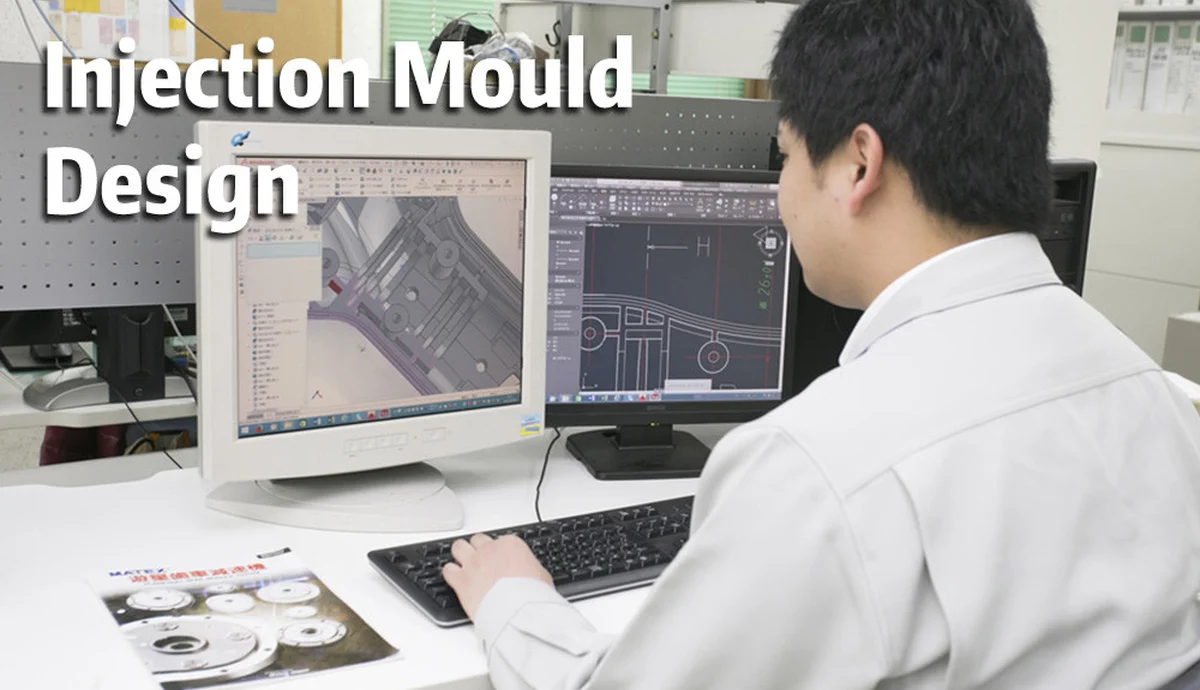
What design information helps before quoting? Provide the native 3D CAD model, relevant 2D tolerances, intended assembly direction, cosmetic surfaces, and features that cannot change. A design-for-manufacturing review can then distinguish essential features from avoidable tool complexity.
3. Tool material, resin wear, and required life
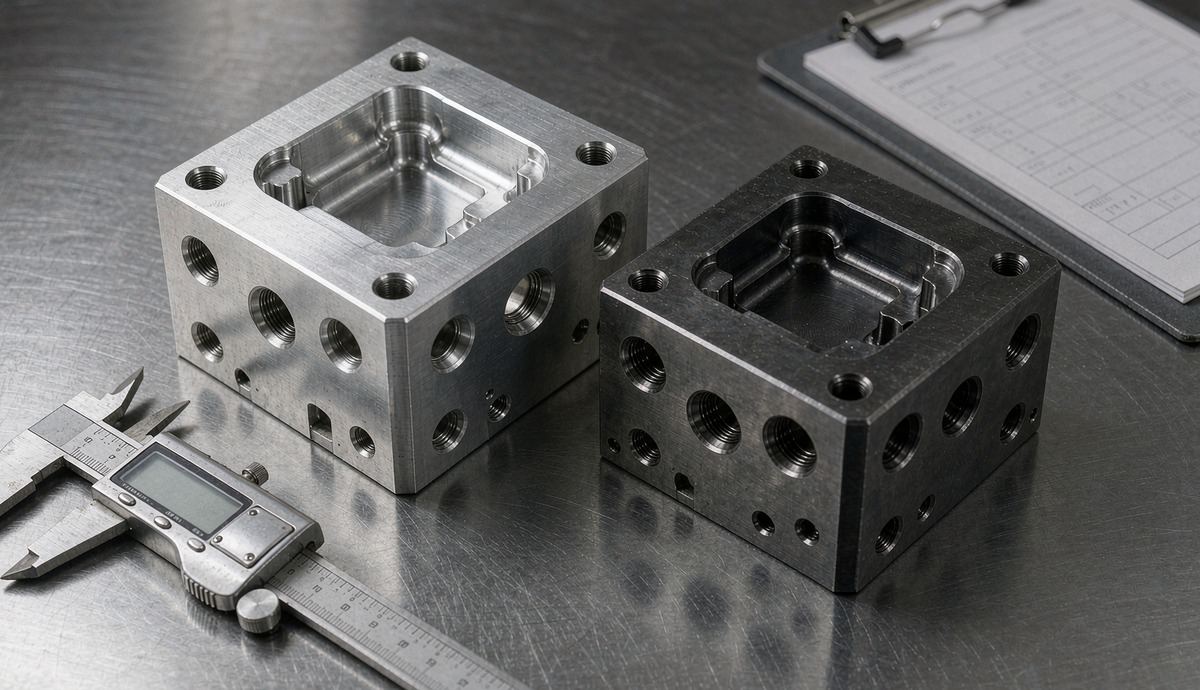
How does mold material affect price? Aluminum and different grades of tool steel differ in purchase cost, machining effort, strength, corrosion resistance, heat treatment, and repair strategy. A lower-cost material may suit limited production, while a specified high-volume tool often needs more durable cavity material and replaceable wear components. The right choice depends on expected shots, resin, part detail, and maintenance plan.
Why does the plastic resin matter to steel selection? Glass-filled compounds can increase abrasion, and some processing environments increase corrosion risk. A tool for an unfilled commodity resin may therefore have a different steel or coating specification from a tool for an abrasive or chemically demanding grade. Ask bidders to name the exact resin grade and propose cavity and core materials against that grade.
What does “tool life” mean in a quote? A shot count is useful only when tied to a defined resin, routine maintenance, acceptable part quality, and replaceable components. Buyers should ask whether the stated life applies to the mold base, cavity inserts, slides, and consumable components separately. Our comparison of soft and hard tooling explains the production-life tradeoff in more detail.
4. Cavity count and production balance
How does cavity count change mold cost? A multi-cavity mold produces more parts per machine cycle, but its cavities, runner network, cooling circuits, ejection system, and inspection work require more design and machining. One cavity may lower the initial investment; several cavities can improve capacity and reduce machine time per accepted part when the process is balanced.
When can more cavities be the wrong purchase? If demand is uncertain, a high-cavity tool may tie up capital before its output is needed. If the part is difficult to fill or cool consistently, adding cavities can multiply variation. Ask for the proposed cycle time, projected annual output, cavity-to-cavity dimensional plan, and capacity assumptions before approving the layout.
Do family molds automatically save money? Placing different parts in one mold can reduce some mold-base costs, but unequal part volumes or flow lengths can complicate filling, quality control, and inventory planning. A family tool should be justified by matched production demand and a runner design that supports all parts. Separate molds may be easier to optimize when the parts’ demand changes independently.
5. Runner, gate, and feed-system design
Why does the feed system influence tooling price? A cold runner is generally simpler to construct but can create runner scrap or regrind that affects operating economics. A hot runner adds heated components, controls, installation, and maintenance requirements, while potentially reducing runner waste and supporting a different production strategy. The lowest initial mold quote and the lowest long-run production cost may therefore differ.
How do gates affect more than appearance? Gate location and style influence filling, weld-line placement, pressure loss, vestige, and downstream trimming. A low-cost gate that leaves an unacceptable visible mark or complicates automated assembly is not an acceptable bargain. Ask the supplier to show the gate proposal on the part drawing and identify the cosmetic and dimensional areas it protects.
What is a fair comparison between runner options? Request separate tooling and operating assumptions for both concepts where volumes justify the study: runner mass, cycle time, color-change needs, maintenance, and expected accepted-part yield. Our guides to hot versus cold runners and gate design cover the technical choices behind this cost decision.
6. Cooling, ejection, and cycle-time architecture
Why can a more expensive cooling system be rational? Mold cooling affects how consistently a part solidifies and how long the press stays occupied each cycle. Complex internal channels, baffles, or inserts increase tool-design and manufacturing work, but better temperature control can reduce distortion, scrap, and machine time. The benefit must be demonstrated against the expected production volume and resin.
Why is ejection part of the quote? A straightforward flat part may eject with standard pins; a thin wall, deep rib, texture, or fragile surface may need sleeves, stripper plates, air assist, or carefully placed pins. Poor ejection can cause marks, deformation, or manual intervention. Buyers should ask how the tool will remove acceptable parts reliably at the planned cycle time.
How can a buyer assess this factor without designing the mold? Ask for the cooling and ejection concept, expected cycle-time range, and identified risks for critical surfaces. The supplier should explain which features are necessary for part quality and which are capacity improvements. See our mold cooling design guide for the principles behind that tradeoff.
7. Tolerances, surface finish, and inspection demands
Why does a tighter tolerance raise mold cost? Precision requirements can increase machining, fitting, measurement, and iterative correction. They may also require more stable temperature control or individually adjustable inserts. A blanket tight tolerance across every dimension costs more than defining only the dimensions that determine fit, sealing, or performance.
How does finish specification change the quote? A high-gloss cosmetic surface or detailed texture can require additional polishing, engraving, specialized steel preparation, and protection during maintenance. The result can also depend on the resin and molding process. Mark the visible faces, acceptable gate and ejector marks, and inspection method on the drawing so suppliers price the same result.
What should be measured before tool acceptance? Identify critical-to-quality dimensions, appearance limits, sample size, test conditions, and who supplies the measurement report. A tolerance is meaningful only when the inspection method and part conditioning are agreed. For a flexible plastic component, for example, the measurement method can influence the reported result as much as a small tooling adjustment.
8. Engineering, trials, qualification, and change control
Why can a quote change after the mold is built? Mold flow review, detailed tool design, CNC and EDM programming, assembly, initial sampling, dimensional reports, and corrections require engineering time. Quotes vary in how many sample rounds, reports, and adjustments they include. A low tool price with one trial and chargeable revisions should not be compared directly with a bid that includes defined qualification work.
What is the difference between a correction and a change request? A correction brings the tool into compliance with the approved drawing and agreed acceptance criteria. A change request alters the approved geometry, resin, tolerance, finish, or production target. Buyers and mold makers should document this distinction before kickoff, along with who authorizes added cost and schedule changes.
What evidence closes the tooling purchase? An accepted first-article report, agreed sample parts, tool drawings or component list, maintenance instructions, spare-part recommendations, and a clear tool ownership record make the asset usable after delivery. The exact package can be scaled to the project, but it should be named in the quotation rather than assumed.
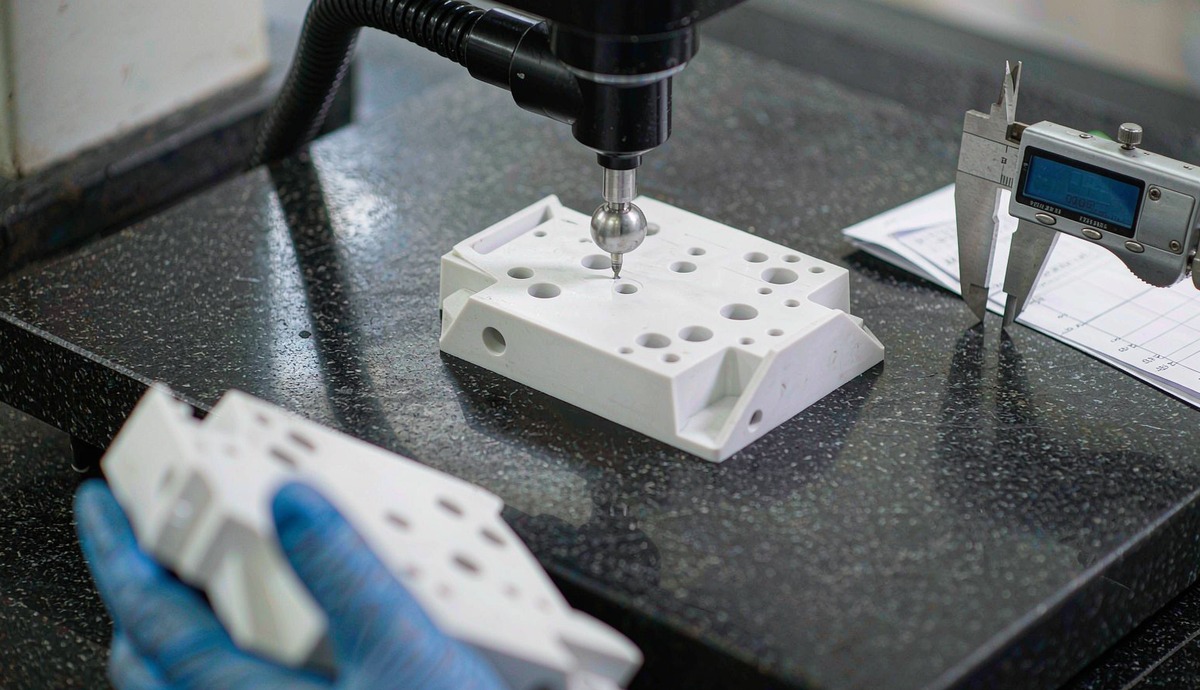
How should buyers compare two injection mold quotations?
Buyers should normalize bids to one written specification before comparing totals. A quote that includes a mold, two trial rounds, dimensional reporting, and export packing is not equivalent to a price for machined steel only. The comparison should list inclusions, exclusions, assumptions, and the unit cost expected at the same volume and quality standard.
| Compare on the same basis | Record for each supplier | Why it matters |
|---|---|---|
| Part definition | CAD revision, resin grade, finish, critical tolerances | Prevents different designs from appearing comparable |
| Tool construction | Steel or aluminum grades, mold base, inserts, actions, cavities | Shows durability and maintenance assumptions |
| Process concept | Gate, runner, cooling, ejection, compatible press | Connects tool price to output and quality |
| Acceptance | Trials, sample quantity, inspection report, correction allowance | Defines when the tool is complete |
| Commercial scope | Ownership, storage, maintenance, spare parts, packing, freight terms | Reveals costs that may appear later |
| Schedule | Design approval, steel release, first samples, final acceptance | Makes delivery claims measurable |
How should a buyer challenge a surprisingly cheap mold quote? Ask which of the eight factors were simplified and whether the simplification is compatible with the product. A smaller mold base or single cavity may be a sound choice for a pilot run; unspecified steel, missing trial work, or an unclear ownership clause are missing information rather than proven savings.
When does a higher-priced mold pay for itself?
The break-even point depends on the difference in upfront tooling price divided by the difference in cost per accepted part. Consider a simplified example: Tool A costs $12,000 and yields parts at $1.80 each; Tool B costs $22,000 and yields parts at $1.10 each. Tool B requires $10,000 more upfront and saves $0.70 per accepted part, so its simple crossover is about 14,286 accepted parts.
At 10,000 accepted parts, the simplified totals are $30,000 for Tool A and $33,000 for Tool B. At 20,000 accepted parts, they are $48,000 and $44,000 respectively. These figures are hypothetical and assume the same resin, quality requirement, included operations, and no differing maintenance or financing cost. Their purpose is to show why annual demand and accepted-part yield belong in a tooling decision.
What if the forecast is uncertain? Compare a low, base, and high demand scenario and test the effect of scrap, maintenance, and capacity constraints. If demand can change substantially, a serviceable bridge tool or an insert strategy may preserve options more effectively than either the cheapest prototype tool or the largest production tool.
What information should a B2B buyer send for an accurate quote?
A useful request for quotation starts with the latest 3D CAD file and a controlled drawing revision. It identifies the exact resin grade, color, annual and lifetime volumes, planned launch date, assembly use, critical tolerances, cosmetic surfaces, and any regulatory or traceability requirements that actually apply. Those inputs let the toolmaker distinguish technical requirements from preferences.
The buyer should also specify whether the quote must include tool design, samples, measurement reports, shipping, mold ownership, storage, maintenance, and spare components. If multiple cavity counts or runner systems are possible, request clearly labeled alternatives. A quote with explicit options supports a decision; an unexplained price range does not.
Before releasing steel, confirm the design-for-manufacturing findings, parting line, gate position, ejector marks, cavity count, steel specification, acceptance protocol, and change procedure. This design freeze reduces late revisions, which are particularly costly once cavities and cores have been machined.
Which quote exclusions most often cause budget surprises?
Sampling is a common source of misunderstanding because “sample included” can refer to the first molded parts only, not the resin, color matching, inspection report, freight, or further trials after feedback. Ask how many trial rounds and sample pieces are included, which resin will be used, and how a failed measurement is handled. A trial with a substitute resin may confirm filling but cannot automatically approve performance in the specified production material.
Secondary operations can be mistaken for tooling charges when a finished assembly rather than a molded component is being purchased. Inserts, printing, welding, painting, packaging fixtures, and assembly checks may each need separate tooling or setup. Listing these operations in the request for quotation avoids comparing a bare-part mold with a turnkey product quote.
Tool location and logistics can also alter a purchase’s total cash requirement. Export packing, freight, insurance, import charges, and installation or trial runs on the receiving press are distinct from building the mold. The purchase order should identify the delivery point and who is responsible for each step, especially when the mold will be transferred between factories.
Finally, a price should specify what happens after acceptance. A replacement insert, preventive maintenance interval, or corrective repair may be priced separately even when the original mold meets its specification. Ask for a recommended spare-parts list and documented maintenance assumptions so a long production campaign has a realistic support plan.
Frequently asked questions about injection mold cost
Is mold cost a one-time charge?
Injection mold construction is usually an upfront project charge, but a production asset can incur maintenance, replacement components, engineering changes, storage, and eventual refurbishment. A purchasing comparison should state which of these services are included and which are billed separately.
Does a cheaper mold always make cheaper parts?
A cheaper mold does not necessarily make cheaper accepted parts. A low-cavity layout, slow cooling, runner waste, or frequent manual attention can raise unit cost over a long production run. Conversely, a simpler tool can be the economical choice when volume is low and the quality target is met.
Can a mold quote be firm before a design review?
A mold supplier can provide an indicative estimate from preliminary information, but a firm scope depends on the approved part design, resin, tolerances, production target, and acceptance criteria. Unresolved undercuts or surface requirements can materially change the tool concept, so early estimates should list their assumptions.
Who should own the injection mold?
Tool ownership is a commercial term that buyers should negotiate and document. The agreement should say who owns the mold and design files, where it will be stored, what happens if production moves, who pays for maintenance, and how the tool can be transferred. These terms affect the real value of the tooling investment.
How long does it take to build a mold?
Mold lead time depends on design complexity, material availability, machining and assembly workload, trial results, and the number of required corrections. A useful schedule separates design approval, tool fabrication, first samples, and final acceptance; one undifferentiated “lead time” hides these decision points.
Request a tooling quote with a clear scope
DJmolding supports custom injection mold design and manufacturing for B2B plastic-part projects. Share your CAD files, drawing revision, resin, forecast volume, critical features, and launch target with our engineering team. We can review the eight cost drivers, propose a suitable tool concept, and return a quotation whose scope you can evaluate. Contact DJmolding to discuss your project.
