


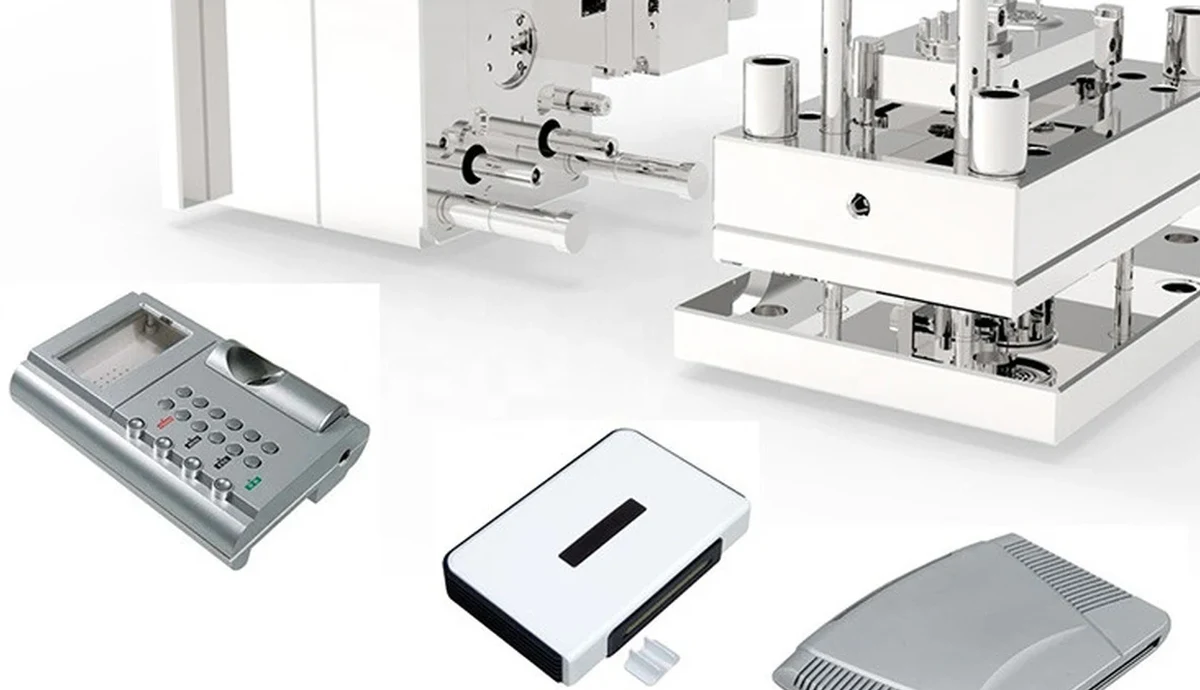
Processing Parameters and Enclosure Design Rules for ABS Plastic Injection Molding
Quick answer: ABS enclosures mold best when the resin is dried at about 80 to 90 °C for 2 to 4 hours to below 0.1% moisture, melted at roughly 210 to 260 °C and injected into a mold held at 50 to 80 °C, with higher mold temperatures for glossy cosmetic surfaces. On the design side, ABS enclosures work best with a uniform nominal wall of about 1.5 to 3.0 mm, ribs at 50 to 60% of the wall, at least 1° of draft on smooth walls and more on textured walls, screw bosses sized for thread-forming screws, and gates and weld lines placed away from visible faces.
This guide is written for product designers, mechanical engineers and sourcing teams who develop ABS housings for electronics, appliances, instruments and consumer devices. It combines the processing window molders use with the enclosure-specific design rules that decide whether two housing halves fit, look good and survive assembly. For general design rules that apply to every resin, see our injection molding DFM guide; this article focuses on what is specific to ABS and to enclosures.
Why is ABS a common choice for plastic enclosures?
ABS (acrylonitrile butadiene styrene) is common for enclosures because it combines good impact strength, stiffness, dimensional stability and an attractive surface at a moderate cost. It molds easily into thin, detailed housings, accepts textures, paint, printing and plating, and is available in flame-retardant, high-heat and PC/ABS blend grades for electrical products.
| Property | Typical general-purpose ABS | Why it matters for enclosures |
|---|---|---|
| Mold shrinkage | About 0.4 to 0.7% | Low, predictable shrinkage helps two halves fit |
| Heat deflection temperature | About 85 to 100 °C at 1.8 MPa | Enough for most indoor electronics and appliances |
| Impact strength | Good, including at room temperature | Survives drops and assembly |
| Surface | Glossy or textured, easy to decorate | Cosmetic housings without secondary finishing |
| Chemical resistance | Moderate; sensitive to some solvents and oils | Check cleaners and greases that contact the housing |
For a broader overview of ABS molding, see our ABS injection molding guide, and for a comparison with another common resin, see nylon vs ABS injection molding.
Which ABS grade should be used for an enclosure?
The ABS grade should be chosen by the operating temperature, flammability requirement, impact need and finish of the enclosure. General-purpose ABS suits many indoor housings, flame-retardant ABS is used where electrical safety standards require a UL 94 rating, high-heat ABS or PC/ABS suits housings near heat sources, and plating-grade ABS is used for chrome-plated parts.
| Grade | Typical use | Processing note |
|---|---|---|
| General-purpose ABS | Consumer devices, remote controls, small appliances | Widest process window |
| Flame-retardant ABS (V-0 or V-2 grades) | Power supplies, chargers, electrical housings | Narrower window; avoid overheating and long residence time |
| High-heat ABS | Housings near motors, lamps or heating parts | Higher melt and mold temperatures |
| PC/ABS blend | Laptops, meters, tougher electronics housings | Higher drying and melt temperatures than ABS |
| Plating-grade ABS | Decorative chrome parts | Controlled surface stress for plating adhesion |
Confirm the flammability rating, color and thickness of the exact grade with the resin supplier, because UL ratings apply to specific thicknesses and colors. For material selection in general, see how to choose plastic materials for injection molding.
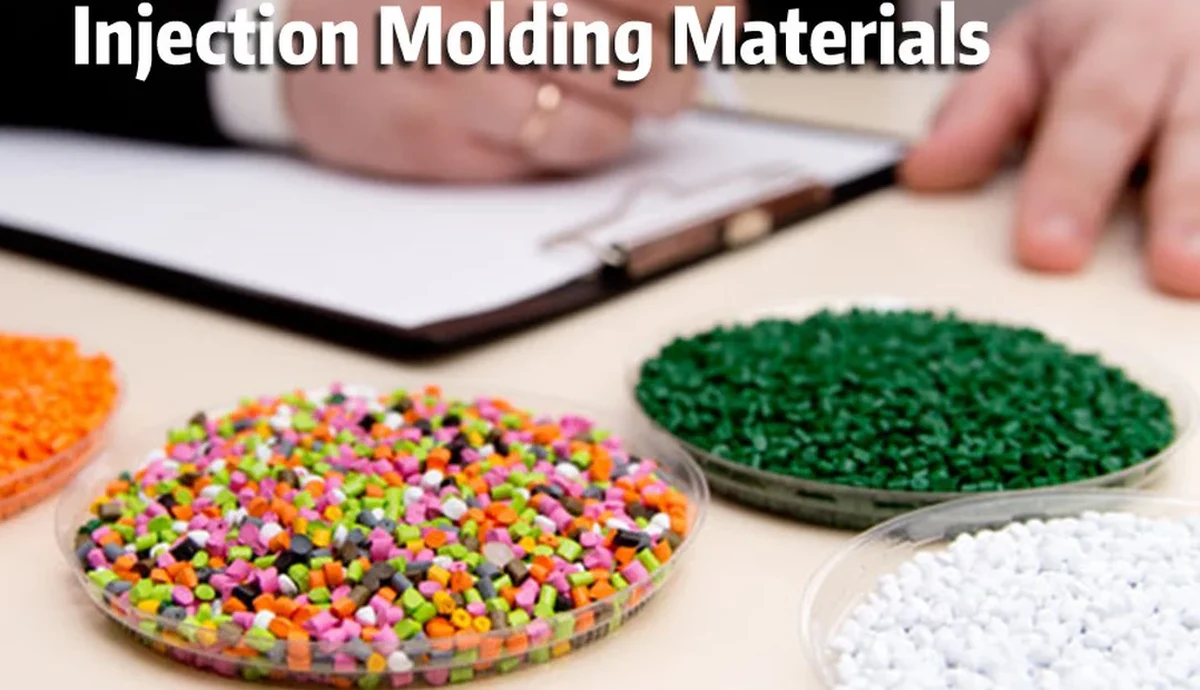
What are the recommended processing parameters for ABS injection molding?
ABS is processed in a moderate temperature window. The typical starting points are drying at 80 to 90 °C for 2 to 4 hours, a melt temperature of about 210 to 260 °C, a mold temperature of 50 to 80 °C, medium to high injection speed and holding pressure set to control sink without overpacking. Final values depend on the grade, wall thickness and cosmetic requirements and should follow the resin datasheet.
| Parameter | Typical range for ABS | Effect on enclosures |
|---|---|---|
| Drying | 80 to 90 °C, 2 to 4 hours, moisture below 0.1% | Prevents splay and silver streaks |
| Melt temperature | About 210 to 260 °C | Too low gives flow lines; too high causes discoloration |
| Mold temperature | 50 to 80 °C (higher for high gloss) | Controls gloss, weld line visibility and stress |
| Injection speed | Medium to high, profiled | Fills thin walls; too fast can cause burns or jetting |
| Holding pressure | Often 40 to 60% of injection pressure | Controls sink and dimensions |
| Back pressure | Low to moderate | Improves color mixing without overheating |
| Residence time | Keep short, especially for FR grades | Avoids degradation and black specks |
For processing in general, see what the injection molding process is.
How does mold temperature change the appearance of an ABS enclosure?
Mold temperature has a strong effect on ABS appearance. A warmer mold, typically 60 to 80 °C, gives higher gloss, more faithful texture replication and less visible weld lines and flow marks, while a cold mold below about 40 °C tends to produce a dull surface, more visible flow lines and higher molded-in stress. The trade-off is a longer cooling time.
| Mold temperature | Surface result | Cycle impact |
|---|---|---|
| Below about 40 °C | Dull, visible flow lines, more stress | Shortest cooling |
| 50 to 60 °C | Good general finish | Balanced |
| 60 to 80 °C | High gloss, better texture, less visible weld lines | Longer cooling |
| Dynamic heating and cooling | Near weld-line-free piano gloss | Special tooling and higher cost |
Cooling channel layout must keep both mold halves at even temperature, otherwise one half of the enclosure will shrink differently and warp. See plastic injection mold cooling system design.
What wall thickness should an ABS enclosure have?
Most ABS enclosures use a nominal wall between 1.5 and 3.0 mm, with 2.0 to 2.5 mm common for handheld and desktop devices. Thinner walls down to about 1.2 mm are possible for small parts with short flow lengths, while walls above about 3.5 mm increase sink, voids and cycle time. Uniform thickness matters more than the exact value.
| Enclosure size | Typical ABS nominal wall |
|---|---|
| Small handheld (remote, sensor) | 1.5 to 2.0 mm |
| Desktop device, router, meter | 2.0 to 2.5 mm |
| Larger appliance housing | 2.5 to 3.0 mm |
| Heavy-duty or impact-critical cases | 3.0 to 3.5 mm or ribbed thinner wall |
Where thickness must change, use a gradual transition over a length of about three times the thickness change. Thick sections in ABS cause sink marks on the visible face; see sink marks in injection molding.
How should ribs and bosses be designed in an ABS enclosure?
Ribs in ABS enclosures should be about 50 to 60% of the nominal wall on cosmetic faces, up to about three times the wall in height, spaced at least two to three wall thicknesses apart and given 0.5 to 1° of draft per side. Bosses for screws should be tied to walls with ribs or gussets instead of standing alone, and the boss wall should be about 60% of the nominal wall to limit sink on the outer face.
| Feature | Typical ABS rule |
|---|---|
| Rib thickness | 50 to 60% of nominal wall (lower on glossy faces) |
| Rib height | Up to about 3 times nominal wall |
| Rib base radius | About 0.25 to 0.5 times nominal wall |
| Boss wall thickness | About 60% of nominal wall |
| Boss support | Gussets or ribs to the side wall |
| Boss base radius | About 0.25 to 0.5 times nominal wall |
On high-gloss surfaces even correct ribs can show faint sink, so cosmetic faces sometimes need thinner ribs, a texture or a designed feature line to hide the rib position.
How should screw bosses be sized for ABS enclosures?
Screw bosses in ABS enclosures are usually designed for thread-forming screws made for plastics or for heat-set or ultrasonic brass inserts. For thread-forming screws, the pilot hole is typically about 80 to 85% of the screw major diameter, the boss outer diameter about 2 to 2.5 times the screw diameter and the engagement length about 2 to 2.5 times the screw diameter. Exact values should follow the screw supplier recommendations.
| Fastening method | Strength and reuse | Best for |
|---|---|---|
| Thread-forming screws | Good strength, limited reassembly | Low-cost housings assembled once or twice |
| Heat-set or ultrasonic brass inserts | High strength, many reassembly cycles | Serviceable devices and metric machine screws |
| Molded-in inserts | Very high strength | High loads; adds cycle time |
| Snap fits | Tool-free assembly | Battery covers and fast assembly |
Avoid overtightening screws in ABS, because high hoop stress around the boss can cause cracking, especially if the housing later meets cleaning chemicals.
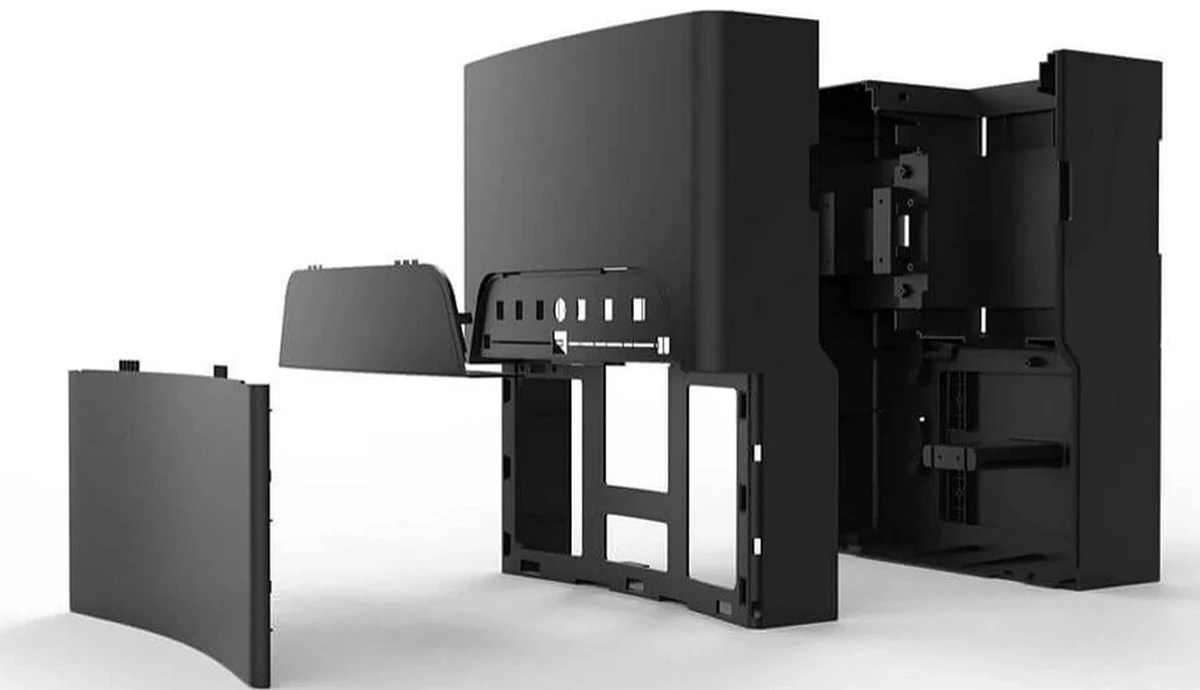
How should the two halves of an ABS enclosure be joined?
The two halves of an ABS enclosure are usually located by a lip-and-groove or tongue-and-groove joint and held by screws, snap fits or welding. A lip-and-groove joint aligns the halves, hides small mismatches, blocks light and dust and stiffens the parting edge, while a plain butt joint shows every misalignment along the visible edge.
| Joint type | Advantage | Typical use |
|---|---|---|
| Lip and groove | Self-aligning, hides mismatch | Most electronics housings |
| Tongue and groove with gasket | Supports sealing | Splash- or dust-resistant housings |
| Step joint with reveal line | Designed gap hides mismatch | Cosmetic consumer products |
| Ultrasonic weld joint | Permanent, sealed | Non-serviceable devices |
- Use a lip height of about 1.0 to 1.5 times the wall thickness with a small clearance, often 0.05 to 0.15 mm per side.
- Add a decorative reveal line at the parting edge to hide small step differences.
- For ultrasonic welding, add an energy director on one half.
What snap-fit rules apply to ABS enclosures?
Snap fits in ABS must keep strain within the material limit, because ABS is stiffer and less forgiving than polypropylene or nylon. Cantilever snaps should be tapered, have a generous root radius and be sized so that the strain during assembly stays within the allowable value given by the resin supplier, typically a few percent for one-time assembly and lower for repeated use.
- Make the cantilever length at least about five times its thickness.
- Taper the beam from root to tip to spread strain.
- Use a root radius of at least about 0.5 times the beam thickness.
- Use a lead-in angle of about 25 to 35° and a retention angle chosen for removable or permanent closure.
- Plan side actions or pass-through cores for undercut hooks in the mold.
Snap fits with sharp roots are a common cause of stress whitening and cracking in ABS housings, especially after exposure to oils or cleaning agents.
How much draft do textured ABS enclosure walls need?
Smooth ABS enclosure walls need at least about 0.5 to 1° of draft per side, while textured walls need more: a common rule is about 1° of additional draft for every 0.025 mm of texture depth, so light textures need roughly 1.5 to 3° and heavy textures 3 to 5°. Insufficient draft on textured walls causes drag marks and scuffing during ejection.
| Surface | Typical draft per side |
|---|---|
| Polished or glossy | 0.5 to 1° |
| Light texture | 1.5 to 3° |
| Medium to heavy texture | 3 to 5° or as specified by the texture supplier |
| Internal ribs and cores | 0.5 to 1° minimum |
See mold textures in injection molding and injection molding surface finishes.
Where should gates and weld lines be placed on an ABS enclosure?
Gates on ABS enclosures should be placed on hidden or non-cosmetic surfaces, usually inside the housing or at an edge, and positioned so that flow fronts meet in non-visible or low-stress areas. Weld lines in ABS can be visible on glossy or dark parts and are weaker than the base material, so they should not cross snap-fit roots, screw bosses or thin sections under load.
- Use sub gates or tunnel gates on inside walls for automatic degating.
- Use hot runners or valve gates for large housings to balance filling.
- Move weld lines away from openings, logos and display windows where possible.
- Use higher mold temperature to reduce weld line visibility.
See injection mold gate design for gate types.
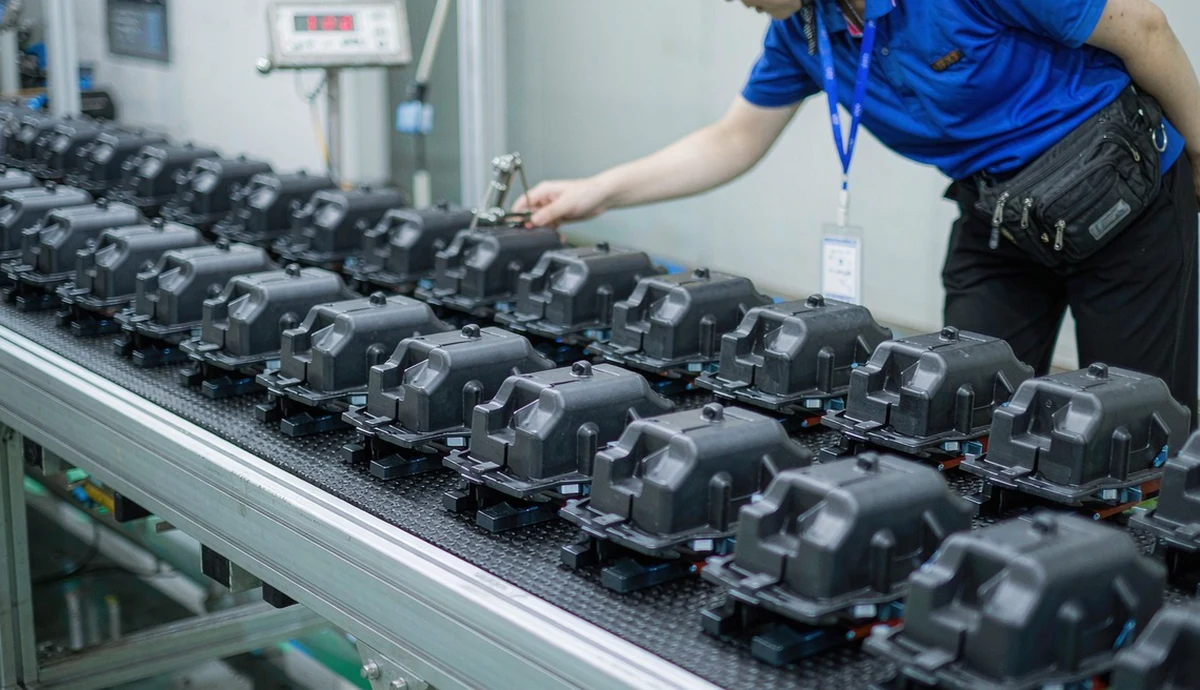
How should vents, slots and openings be designed in ABS enclosures?
Vent slots, button holes and display openings in ABS enclosures should be designed so they can be formed by simple mold steel and do not create weak or cosmetically poor areas. Thin steel between slots wears and breaks, while openings placed in the flow path create weld lines around their edges.
| Feature | Typical rule |
|---|---|
| Vent slot width | At least about the nominal wall thickness |
| Bar between slots | At least about the nominal wall thickness for steel strength |
| Slot direction | Parallel to the mold opening direction to avoid side actions |
| Edges of openings | Small radius or chamfer to reduce stress and burrs |
| Opening near gate | Avoid where possible; it creates a weld line behind the opening |
If an enclosure needs a dust or splash rating, plan gasket grooves or labyrinth vents early, because sealing features change the joint design and wall layout.
Which finishing options work best on ABS enclosures?
ABS accepts more finishing options than most commodity resins, which is one reason it is popular for enclosures. Molded-in textures and high gloss avoid secondary operations, while painting, pad printing, laser marking, plating and EMI coatings add decoration or function after molding.
| Finish | Typical use | Design note |
|---|---|---|
| Molded texture | Hide scratches, sink and flow marks | Increase draft by texture depth |
| High gloss | Premium consumer products | Needs polished steel and higher mold temperature |
| Painting and soft-touch coating | Color matching, tactile feel | Control mold release and surface stress |
| Pad printing and laser marking | Logos and markings | Use flat or gently curved areas |
| Chrome plating | Decorative trims | Use plating-grade ABS |
| Conductive EMI coating | Shielding of electronics | Mask contact areas and define coating zones |
Which defects are most common in ABS enclosures and how are they fixed?
The most common defects in ABS enclosures are splay from moisture, sink marks over ribs and bosses, visible weld and flow lines, gloss differences, warpage and stress whitening around snaps and bosses. Most of them can be traced either to drying, mold temperature or a design feature that concentrates material or stress.
| Defect | Typical cause | Typical fix |
|---|---|---|
| Splay or silver streaks | Wet resin | Dry to below 0.1% moisture; check dryer dew point |
| Sink marks | Thick ribs or bosses, low packing | Thinner ribs, coring, higher hold pressure |
| Weld and flow lines | Cold mold, low melt temperature, gate position | Raise mold and melt temperature, move gates, add vents |
| Gloss differences | Uneven mold temperature or packing | Balance cooling and packing |
| Warpage | Uneven wall or cooling | Uniform wall, balanced cooling, ribs |
| Stress whitening or cracks | Sharp corners, high strain, chemicals | Add radii, reduce strain, check chemical contact |
| Burn marks | Trapped air, too fast injection | Add vents, profile injection speed |
For more defect solutions, see injection molding defects and how to prevent them.
Which tolerances are realistic for ABS enclosure parts?
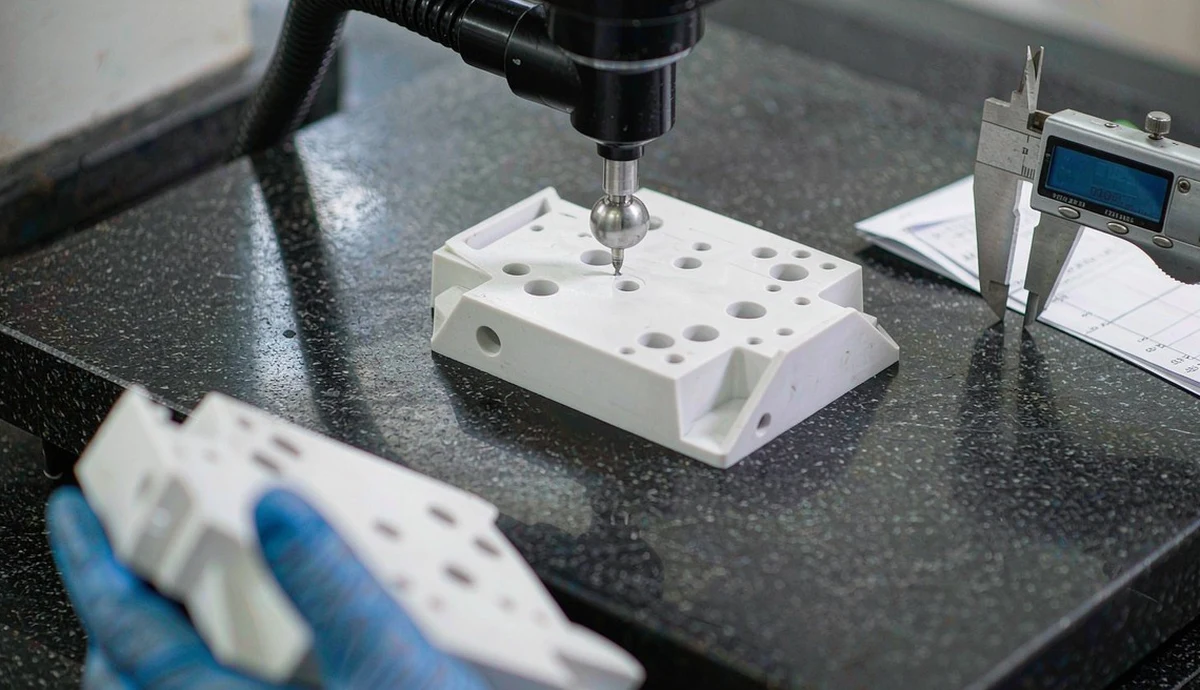
Because ABS has low and fairly uniform shrinkage, molded ABS enclosure parts can often hold general tolerances of about plus or minus 0.05 to 0.1 mm on small features and plus or minus 0.1 to 0.2 mm on larger dimensions with a good mold and a stable process. Tighter tolerances are possible on selected features but raise tooling and inspection cost.
Apply tight tolerances only to the features that control fit, such as lip-and-groove dimensions, screw boss positions and display window openings, and allow general tolerances elsewhere. For precision electronics parts, see sub-millimeter tolerances in precision electronic molding.
What should an ABS enclosure design review checklist include?
An ABS enclosure design review should confirm grade, wall thickness, ribs and bosses, joints, snap fits, draft, gate and weld line positions, cosmetic surfaces and tolerances before the mold is built. A short checklist prevents most late tooling changes.
- ABS grade, flammability rating, color and texture are defined.
- Nominal wall is uniform and transitions are gradual.
- Ribs and bosses follow ABS ratios and are supported.
- Joint type and clearance between halves are defined.
- Snap fits are checked for allowable strain.
- Draft suits each surface finish and texture.
- Gate positions and expected weld lines are reviewed on a flow simulation.
- Critical-to-function dimensions and tolerances are marked.
Frequently asked questions
What temperature should ABS be dried at before molding?
ABS is typically dried at about 80 to 90 °C for 2 to 4 hours to bring moisture below about 0.1%. Follow the resin datasheet for the exact grade.
What is the best wall thickness for an ABS enclosure?
Most ABS enclosures use 1.5 to 3.0 mm, with 2.0 to 2.5 mm common for handheld and desktop devices. Uniform thickness matters more than the exact number.
Why does my ABS housing show silver streaks?
Silver streaks, or splay, are usually caused by moisture in the resin. Check drying temperature, drying time and dryer performance.
Is PC/ABS better than ABS for enclosures?
PC/ABS offers higher heat resistance and impact strength than ABS and suits tougher electronics housings, but it costs more and needs higher drying and processing temperatures.
How do I hide weld lines on a glossy ABS enclosure?
Move gates so weld lines form in hidden areas, increase mold and melt temperature, improve venting, or use dynamic mold temperature control for high-gloss parts.
Can ABS enclosures be ultrasonically welded?
Yes. ABS welds well ultrasonically when the joint includes an energy director and the parts are designed with consistent wall and fit.
Develop your ABS enclosures with DJmolding
Huizhou DJmolding Co., Ltd. has been a plastic injection molding and mould manufacturer in Guangdong, China, since 2010. The company designs and builds injection molds and produces plastic parts for household appliances, medical equipment, electronic equipment, automotive components and safety and monitoring products, supporting both low volume and high volume manufacturing.
For product developers, OEMs and sourcing teams, DJmolding offers:
- DFM review of ABS, PC/ABS and other enclosure designs before tooling, including wall, rib, boss, joint and gate recommendations.
- In-house mould design and mould manufacturing with CNC machining, precision milling, EDM, wire cutting and grinding equipment.
- High-precision molding with part tolerances that can reach plus or minus 0.01 mm for suitable designs.
- Two-color molding, overmolding and insert molding for housings with soft-touch areas or threaded inserts.
- Rapid prototyping, low volume and high volume production with a defined quality control system.
To review your ABS enclosure design, upload your 3D CAD files and tell us the ABS grade, color and texture, expected volume and critical requirements. Contact the engineering team at info@djmolding.com, call +86-752-6682869 or +86-13352636504, or use the contact page. You can also learn more about DJmolding.
