

Meeting PPAP and IATF 16949 Requirements as an Automotive Injection Molding Supplier
Quick answer: An automotive injection molding supplier meets PPAP and IATF 16949 requirements in two ways:
- by running a quality management system that follows IATF 16949 and the specific requirements of each automotive customer
- by proving, part by part, through the Production Part Approval Process (PPAP), that its production process consistently makes parts that meet every design and customer requirement
For a molder, this means:
- planning each part with APQP
- analysing risks in a process FMEA
- controlling the molding process with a control plan
- proving measurement capability with MSA
- demonstrating process capability on critical characteristics
- submitting a complete PPAP package, normally at Level 3, before production shipments start
Who this guide is for: automotive buyers and supplier quality engineers qualifying injection molders, and molders preparing for their first automotive programs. It explains each requirement in the language of the molding floor. For general supplier audits, see how to audit a plastic injection molding manufacturer for high-precision projects.
What are IATF 16949 and PPAP, and how are they related?
IATF 16949 is the international quality management system standard for automotive production and relevant service parts. It builds on ISO 9001 and adds automotive requirements such as product safety, risk analysis, contingency planning, supplier development, warranty management and the use of the automotive core tools. Certification is issued to manufacturing sites by certification bodies recognised by the International Automotive Task Force.
PPAP is one of the automotive core tools. It defines the evidence a supplier must provide to obtain approval of a production part before shipping it to the customer. In practice, IATF 16949 describes how the whole plant must be managed, and PPAP proves that one specific part, made with one specific process, meets requirements. A molder can hold IATF 16949 certification and still need a separate PPAP approval for every new part, change or transfer.
What are the automotive core tools a molder must use?
The automotive core tools are five linked methods that IATF 16949 expects suppliers to apply:
| Core tool | Purpose | What it means for injection molding |
|---|---|---|
| APQP (Advanced Product Quality Planning) | Structured planning from concept to launch | Feasibility, DFM, mold design review, sampling, trial runs and launch readiness in defined phases |
| FMEA (Failure Mode and Effects Analysis) | Identify and reduce risks | Process FMEA covers drying, molding, handling, secondary operations, packing and their failure modes |
| MSA (Measurement System Analysis) | Prove measurement is reliable | Gauge R&R studies for CMM programs, fixtures and gauges used on critical dimensions |
| SPC (Statistical Process Control) | Monitor and control variation | Control charts and capability indices for critical dimensions and process parameters |
| PPAP (Production Part Approval Process) | Obtain customer approval of the production part | Documented evidence package from a production-representative run |
The tools work as a chain. APQP organises the work. The process FMEA identifies what can go wrong. The control plan defines how each risk is controlled. MSA proves the measurements are trustworthy. SPC shows the process stays in control. PPAP packages the evidence for customer approval.
What are the 18 PPAP elements for an injection molded part?
The PPAP manual defines 18 elements. For an injection molded part, each element has a concrete meaning:
- Design records: The released drawing and 3D model, with every characteristic numbered for the dimensional report.
- Authorised engineering change documents: Records of any approved changes not yet on the drawing.
- Customer engineering approval: Required where the customer specifies it, for example after validation testing.
- Design FMEA: Owned by the design-responsible party, which is usually the customer for build-to-print parts.
- Process flow diagram: From resin receipt, drying and molding through any secondary operations, inspection, packing and shipping.
- Process FMEA: Covers molding risks such as short shots, sink, warpage, flash, contamination, wrong material and mixed parts.
- Control plan: Lists every control, frequency, method and reaction plan.
- Measurement system analysis studies: Gauge R&R and attribute studies.
- Dimensional results: Measured values for every characteristic, normally for each cavity.
- Material and performance test results: Resin certificates, and functional and validation tests.
- Initial process studies: Capability on special characteristics.
- Qualified laboratory documentation: Covers internal and external labs used for testing.
- Appearance approval report: Required for parts with appearance requirements such as colour, grain and gloss.
- Sample production parts: Taken from the PPAP run.
- Master sample: Retained as the approved reference.
- Checking aids: Fixtures and gauges used for inspection.
- Customer-specific requirements: Records of compliance with each requirement of the customer.
- Part submission warrant (PSW): The signed summary declaring that the part meets all requirements.
What are the PPAP submission levels?
The submission level defines which elements the supplier sends to the customer and which it keeps on file for review. The customer chooses the level, and Level 3 is the most common default.
| Level | Submitted to customer | Typical use |
|---|---|---|
| Level 1 | Part submission warrant only (plus appearance report if applicable) | Simple, low-risk parts or repeat approvals |
| Level 2 | PSW with product samples and limited supporting data | Moderate-risk parts |
| Level 3 | PSW with product samples and complete supporting data | Default level for new parts and most changes |
| Level 4 | PSW and other requirements defined by the customer | Customer-specific programs |
| Level 5 | PSW with samples and complete data reviewed at the supplier site | Critical parts and new suppliers |
At every level, the supplier must hold all 18 elements on file. The level changes only what is sent, not what must exist.
How should the PPAP production run be planned for a molded part?
The PPAP parts must come from a significant production run made under production conditions. That means the production mold, the production press, the production material lot, the validated process settings, trained production operators and the normal inspection plan. Many customers specify a minimum run, often several hours of production or a few hundred parts, so that the process shows its real variation. Parts from a toolroom trial or from settings tuned for samples do not represent production and can lead to problems after approval.
The PPAP run should be planned as a launch rehearsal. That includes:
- dryer settings confirmed
- robots and end-of-arm tooling set as for production
- process monitoring and alarm limits active
- packaging and labels as for series supply
- secondary operations, such as assembly, ultrasonic welding, plating or painting, carried out in their production locations
Many customers combine the PPAP run with a run-at-rate, which verifies that the process can produce the planned daily volume at the quoted cycle time and quality.
Which capability targets must molded parts meet?
Initial process studies demonstrate that special characteristics are produced consistently. The common PPAP acceptance criteria are:
- Ppk greater than 1.67: The process meets acceptance criteria.
- Ppk between 1.33 and 1.67: The process may be acceptable, subject to customer agreement.
- Ppk below 1.33: The process does not meet acceptance criteria and needs corrective action and agreed containment.
Ongoing production is commonly expected to maintain a Cpk of at least 1.33 on special characteristics, unless the customer specifies otherwise.
For multi-cavity molds, capability should be evaluated for each cavity as well as for the combined output, because one weak cavity can hide inside an acceptable average. Capability results are only valid if the measurement system passes MSA. A gauge R&R below 10% of tolerance is considered good, and 10-30% may be accepted depending on the application. Process window development and capability practice are described in the sourcing checklist for custom plastic injection molding.
What does a good process FMEA look like for injection molding?
A process FMEA for injection molding should follow the actual process flow and examine each step for ways it could fail, the effect on the customer, the cause and the current controls. Typical failure modes include:
- wet or contaminated resin causing splay or brittleness
- wrong material or colour loaded
- regrind ratio out of control
- short shots, flash, sink and voids
- warpage outside tolerance
- missing or misplaced inserts in insert molding
- damaged parts from robot handling
- mixed cavities or lots in packing
- incorrect labels
Current automotive practice follows the AIAG-VDA FMEA method, which uses action priority rather than a simple risk priority number. High-priority risks need preventive or detective actions, such as error-proofing of material loading, cavity pressure monitoring, automatic reject gates, vision inspection for missing inserts, and barcode label verification. A good process FMEA is a living document. It is updated after every complaint, scrap trend, change and lesson learned, not filed away after PPAP.
What should the control plan for a molded part contain?
The control plan turns the process FMEA into daily controls. For an injection molded part, it lists each process step, the product and process characteristics controlled at that step, the specification, the measurement method, the sample size and frequency, the control method and the reaction plan. Special characteristics identified by the customer or the FMEA are marked and given stronger controls.
| Process step | Example characteristic | Typical control |
|---|---|---|
| Material drying | Drying temperature and time, moisture content | Dryer setpoint log, moisture analyser checks |
| Molding | Cushion, injection pressure, cycle time, mold temperature | Process monitoring with alarms and automatic rejection |
| First-off approval | Critical dimensions, appearance | Measurement against drawing and master sample before release |
| In-process inspection | Critical dimensions, visual defects | SPC charts at defined frequency per cavity |
| Packing | Quantity, cavity and lot separation, labels | Count verification, label scanning, packaging instruction |
The control plan must match the process actually running. Auditors frequently compare a control plan line with the press, gauge and record at the workstation. Process parameters such as cushion are explained in what is cushion and why you need to hold it.
How are appearance parts approved?
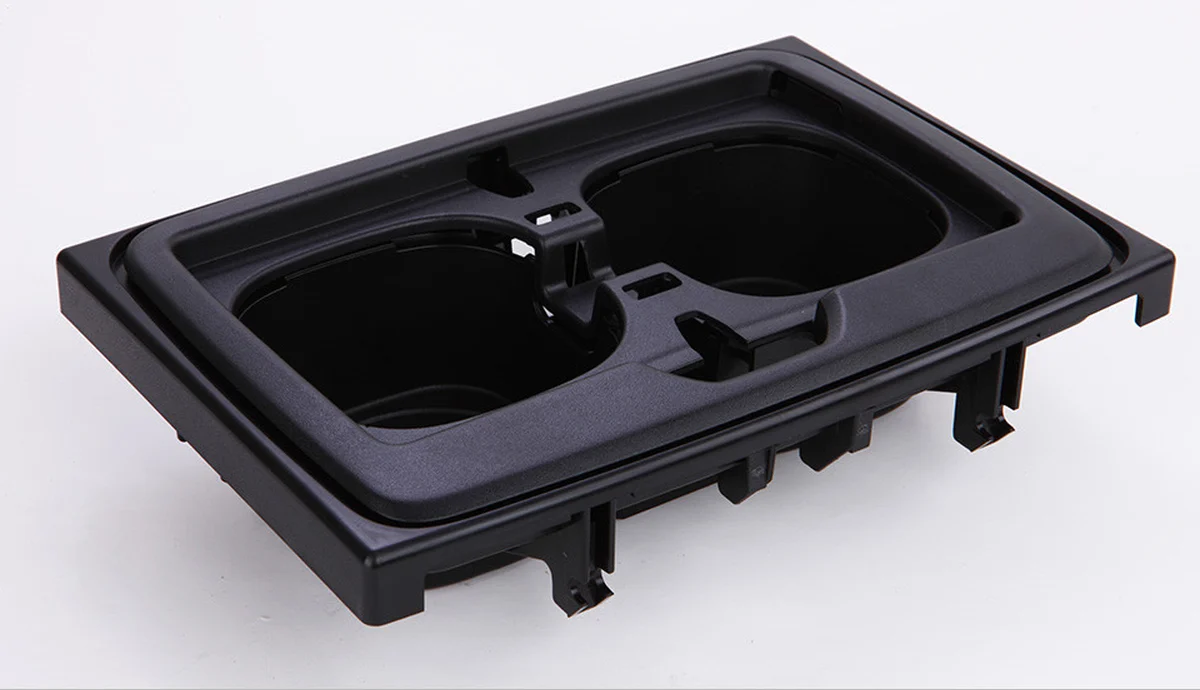
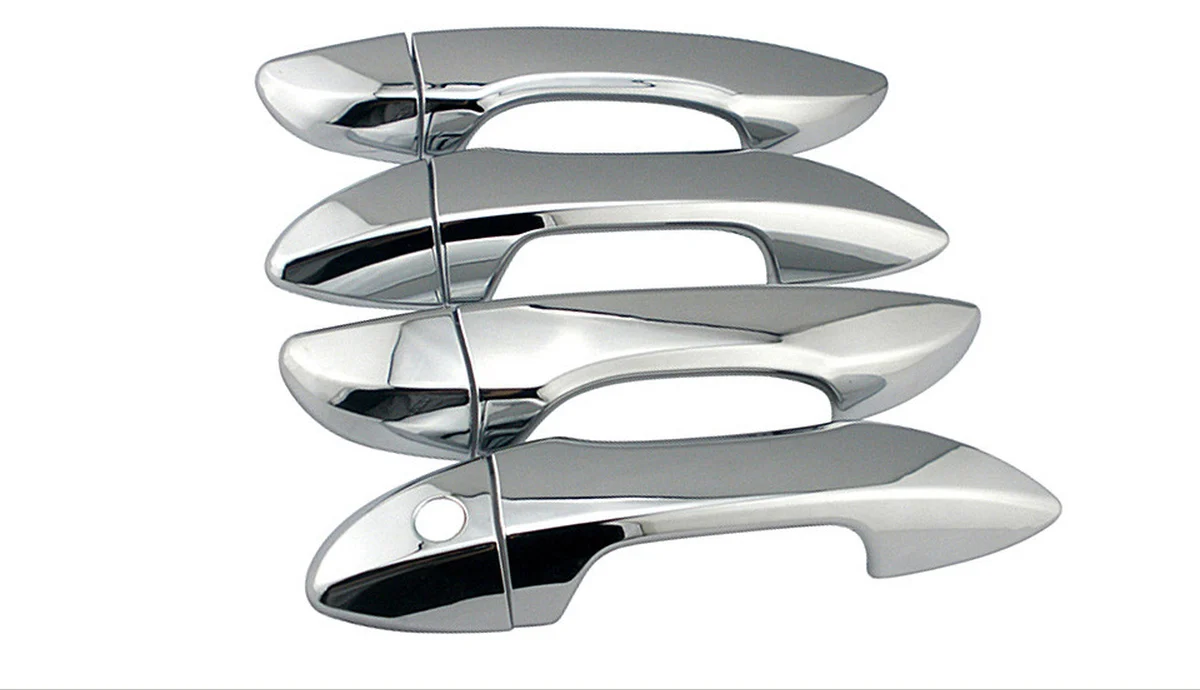
Parts with appearance requirements need an appearance approval report (AAR) as part of PPAP. These include visible interior trim, exterior grilles, chrome-plated or painted parts, and textured surfaces. The AAR records colour, gloss, grain or texture, and metallic or plating appearance against the customer master or specification, under defined lighting and viewing conditions. Approved boundary samples help operators and inspectors judge borderline parts consistently.
Appearance is sensitive to small process and material changes. Mold temperature, injection speed, colourant lot and texture wear all affect gloss and colour. For plated or painted parts, the secondary process supplier must also be controlled under the PPAP of the molder. Customers often require periodic appearance checks against the master sample during production.
Which materials and data reporting requirements apply?
Automotive customers require full material traceability and material data reporting. Molders must use the exact resin grade specified on the drawing or an approved alternative. They must keep supplier certificates of analysis for every lot and link each production lot to its material lots. Most vehicle manufacturers also require material composition data to be submitted through the International Material Data System (IMDS) or a similar platform, to support regulations on restricted substances and recycling.
Performance testing may include mechanical tests, heat ageing, UV and weathering resistance, flammability for interior parts, odour and fogging tests, and chemical resistance, according to the material specification of the customer. These tests must be carried out by qualified laboratories, either accredited external labs or internal labs whose scope and competence are documented. Material choice for automotive parts is discussed in how to choose plastic materials for injection molding.
When must a PPAP be resubmitted?
A new or updated PPAP is required whenever a change could affect the part or process. Typical triggers for injection molders are:
- a new part or a new mold
- an engineering change to the drawing
- a change of resin grade or supplier
- mold modification, repair that alters cavity steel, or a replacement or additional cavity
- transfer of the mold to another press or plant
- a change of a secondary operation supplier
- a change in production method, such as manual to automated handling
- tooling that has been inactive for an extended period
Customers also expect advance notice of planned changes. Unauthorised changes are among the most serious findings in automotive supplier audits.
Many customers also require annual requalification, including a full dimensional layout inspection and functional verification, to confirm that the production part still matches the approved PPAP. Mold maintenance records should show that tooling work has not quietly changed dimensions between requalifications.
What does IATF 16949 require beyond PPAP?
IATF 16949 asks the whole plant to work in a controlled, risk-based way. Requirements that molders often find demanding include:
- documented customer-specific requirements for each automotive customer
- contingency plans for supply interruptions, such as press breakdown, power loss, mold damage or material shortage
- a total productive maintenance system for presses, molds and auxiliary equipment
- a calibration and laboratory scope
- competence and training records for operators and inspectors
- a defined problem-solving method such as 8D
- error-proofing
- warranty and field failure analysis
- supplier development for resin, colourant and secondary process suppliers
- internal audits of the management system, the manufacturing process and the product
Many automotive customers also expect molders to meet special process assessments, such as the AIAG CQI-23 Molding System Assessment. It examines how the molder manages materials, molds, process setup, process monitoring and handling. For buyers, CQI-23 results give a molding-specific view of capability that complements the general IATF 16949 certificate.
How should a molder prepare for its first automotive PPAP?
A molder entering automotive work can prepare in stages:
- Design for manufacturability: Review every new part against molding design rules before the mold is built, so that wall thickness, draft and gate locations support capability later. See the injection molding design guide with DFM rules.
- Build the quality system: Establish document control, calibration, training, CAPA and change management to IATF 16949 expectations.
- Adopt the core tools: Train engineers in APQP, the AIAG-VDA FMEA method, MSA, SPC and PPAP, and create templates.
- Strengthen process control: Add process monitoring, scientific molding practice and error-proofing for material and packing.
- Prove measurement capability: Use CMM programs, fixtures and gauge R&R studies for critical characteristics.
- Run a pilot PPAP: Run one on a current part, then review it internally against the requirements of the customer before the first real submission.
The first PPAP usually reveals gaps between how work is done and how it is documented. Closing those gaps before customer review saves time and builds credibility with the supplier quality engineer of the customer.
What are the most common PPAP rejection reasons for molded parts?
Most PPAP rejections for injection molded parts come from a small number of issues:
- Incomplete dimensions: Dimensional results missing characteristics or cavities.
- Non-representative samples: Samples from a non-production run.
- Weak capability: Capability studies below target without an agreed plan.
- Failed MSA: MSA studies that fail or are missing.
- Disconnected documents: Process FMEA and control plan that do not match each other or the process flow.
- Material gaps: Missing material certificates or material data submissions.
- Appearance gaps: Appearance reports without customer sign-off.
- Uncontrolled outsourcing: Secondary operations not covered by the documentation.
- Errors on the warrant: PSW errors such as wrong revision levels or incomplete declarations.
Each of these is preventable with an internal PPAP checklist and a peer review before submission. Supply continuity expectations for certified suppliers are discussed in ensuring supply chain continuity with a certified OEM plastic parts supplier.
Frequently asked questions
Is IATF 16949 certification mandatory for automotive injection molders?
Most vehicle manufacturers and major tier-one suppliers require IATF 16949 certification for suppliers of production parts. Some customers accept ISO 9001 certification with a development plan toward IATF 16949 for lower-tier or non-safety parts.
How long does a PPAP take for an injection molded part?
Once the mold is approved and the process is stable, preparing the PPAP package typically takes a few weeks. That includes the production run, dimensional measurement, capability studies, MSA and documentation. Validation tests required by the customer can extend the timeline.
Does every cavity need to be measured for PPAP?
Yes, in most cases. Dimensional results are normally required for every characteristic on each cavity of a multi-cavity mold, because cavities can vary from one another.
What is the difference between PPAP and first article inspection?
First article inspection verifies that the first parts meet the drawing. PPAP goes further: it proves that the full production process, including controls, measurement systems and capability, will keep producing conforming parts.
Develop your automotive molding program with DJmolding
DJmolding is a plastic injection molding and mould manufacturer founded in 2010 in Guangdong, China, with more than 13 years of experience building automotive moulds. These include HVAC, bumper, lamp, interior and exterior trim, washer tank, instrument panel, fender, bi-injection and door panel moulds. The 15,000 m² facility includes in-house mould design, mold-flow and feasibility analysis, mould manufacturing on CNC machining centres, EDM and wire EDM, and coordinate measuring machine inspection. Its capabilities cover automotive plastic components, two-color molding, insert molding and overmolding, supported by a documented quality control system.
Automotive buyers and supplier quality teams can send part drawings, material specifications, annual volumes, the required PPAP submission level and the specific requirements of the customer. DJmolding will review feasibility and tooling, and provide a quotation covering moulds, production and the documentation package for your program. Contact DJmolding to discuss your automotive injection molding project.
