


On-Demand Manufacturing for Spare Parts: Low-Volume Molding for Legacy Products
Estimated reading time: 9 minutes
Managing aftermarket plastic components for mature or discontinued equipment is one of the toughest supply-chain dilemmas facing OEMs in industrial machinery, automotive, medical devices, and commercial appliances. Original multi-cavity hardened steel molds are often worn out, scrapped, or too expensive to set up for a 150-piece service order—yet stocking 10 years of physical inventory via an “All-Time Buy” (ATB) locks up working capital and invites massive obsolescence write-offs. On-demand manufacturing for spare parts using low-volume injection molding resolves this dilemma by pairing fast, low-cost aluminum or Master Unit Die (MUD) tooling with small-batch, just-in-time production in real OEM engineering resins.
At DJmolding, we help OEM aftermarket teams and service-parts managers keep legacy equipment running for 10 to 20+ years without warehousing mountains of slow-moving plastic inventory. In this operational guide, we compare All-Time Buy warehousing, industrial 3D printing, and on-demand low-volume injection molding across Total Cost of Ownership (TCO), calculate the exact break-even crossover volume, explain how aluminum MUD inserts slash tooling cost by 40%–70%, and detail how to reverse-engineer obsolete parts when original CAD drawings no longer exist.
The Legacy Spare Parts Dilemma: Why Traditional Mass-Molding Fails
When an OEM discontinues a product platform, contractual warranty obligations and customer service agreements typically require spare parts availability for another 7 to 15 years. Demand during this tail phase drops from 50,000 parts per year down to unpredictable bursts of 50 to 800 units every 6 to 18 months.
Traditional high-volume molding contracts break down under this demand profile for three reasons:
- Prohibitive setup and MOQ minimums: Mounting a massive 8-cavity hardened steel tool into a 500-ton press, purging resin, and stabilizing process parameters often carries a $1,000 to $3,000 setup fee—forcing minimum order quantities of 1,000 to 5,000 pieces per run.
- The All-Time Buy (ATB) cash trap: Guessing 10-year lifetime demand upfront almost always fails in one of two directions: over-buying leaves 40% of the warehouse stock written off as scrap, while under-buying forces an emergency mold rebuild years later at triple the cost.
- Tooling decay and supplier turnover: Legacy molds sitting unmaintained in storage rust along cooling channels, lose documentation, or become stranded when an original Tier-1 molder closes—a risk we also address in our single-source vs. dual-source supply risk guide.
3D Printing vs. All-Time Buy vs. On-Demand Low-Volume Injection Molding
Every aftermarket portfolio contains three distinct demand tiers, and forcing all SKUs into a single manufacturing method wastes money. Comparing industrial additive manufacturing (SLS/MJF), All-Time Buy warehousing, and on-demand low-volume injection molding reveals where each strategy delivers the strongest ROI.
| Financial & Technical Metric | All-Time Buy (Mass Batch) | Digital 3D Printing (SLS / MJF) | On-Demand Low-Volume Molding (Al / MUD) |
|---|---|---|---|
| Upfront Tooling CAPEX | $15,000 – $50,000+ (or existing tool) | $0 | $2,500 – $8,500 (Aluminum / MUD insert) |
| Typical Unit Part Cost | $0.50 – $3.00 | $12.00 – $45.00+ | $1.20 – $5.50 |
| Resin & Mechanical Fidelity | 100% OEM virgin thermoplastic | Limited (PA12/TPU; anisotropic Z-axis) | 100% OEM virgin resin (ABS, PC, PA66 GF30, POM) |
| Inventory Carrying Cost | Very high (10-yr storage & scrap risk) | Zero (print 1 to 20 units on order) | Minimal (on-demand 100-500 unit runs) |
| Replenishment Lead Time | Immediate until stock runs out | 3 to 7 days | 7 to 14 days once MUD insert is stored |
| Sweet-Spot Lifecycle Volume | 25,000+ predictable units | 1 to 250 total lifetime units | 300 to 15,000+ units or regulated resins |
The Break-Even Crossover Formula
To decide objectively between 3D printing and building a dedicated low-volume aluminum/MUD mold for a legacy spare part, apply the break-even equation:
Break-Even Volume (Q) = Low-Volume Tooling Cost / (3D Print Unit Cost – Molded Unit Cost)
Consider a discontinued industrial pump housing needing 1,200 replacement units over the next 6 years. An aluminum MUD insert costs $4,500 and produces OEM-grade glass-filled nylon parts for $3.50 each. Industrial SLS 3D printing costs $21.50 per unit (and cannot match true 30% glass-fiber isotropic strength). Dividing $4,500 / ($21.50 - $3.50) yields a crossover of just 250 units. Beyond unit #250, on-demand low-volume injection molding saves $18 on every single replacement part—delivering over $17,000 in net savings while matching original OEM mechanical, chemical, and UL flammability ratings.
Aluminum Tooling and Master Unit Die (MUD) Inserts: The Engine of On-Demand Molding
Two tooling technologies make low-volume spare-parts molding financially viable for batches as small as 100 to 500 units:
- High-Strength Aluminum Tooling (7075 / QC-7 / QC-10): CNC machining aluminum is 2x to 3x faster than cutting hardened H13 steel, slashing tooling lead time from 6–8 weeks down to 10 to 15 days and reducing upfront mold CAPEX by 40% to 70%. High-grade aluminum cavities comfortably run 5,000 to 25,000+ cycles in unfilled resins (ABS, PC, PP, POM)—far exceeding the remaining 10-year demand of most legacy products.
- Master Unit Die (MUD) Interchangeable Inserts: Instead of purchasing a complete standalone mold base, ejector box, and cooling manifold for every spare-part SKU, a MUD insert consists solely of the compact cavity and core blocks that slide into a standardized master holder frame already mounted in our injection press. Because changeovers take under 20 minutes and base hardware is shared across dozens of legacy SKUs, MUD tooling cuts per-SKU tooling cost by another 30%–45% and eliminates punitive press setup charges.
For legacy parts running abrasive glass-filled resins (PA66 GF30) or requiring 20,000–50,000 lifecycle units, we substitute pre-hardened P20 steel MUD inserts inside the exact same master frame. Explore how low-volume bridge tools transition across product lifecycles in our bridge tooling guide and compare steel versus aluminum longevity in our mold steel selection guide.
Reverse Engineering Obsolete Spare Parts When Original CAD Is Lost
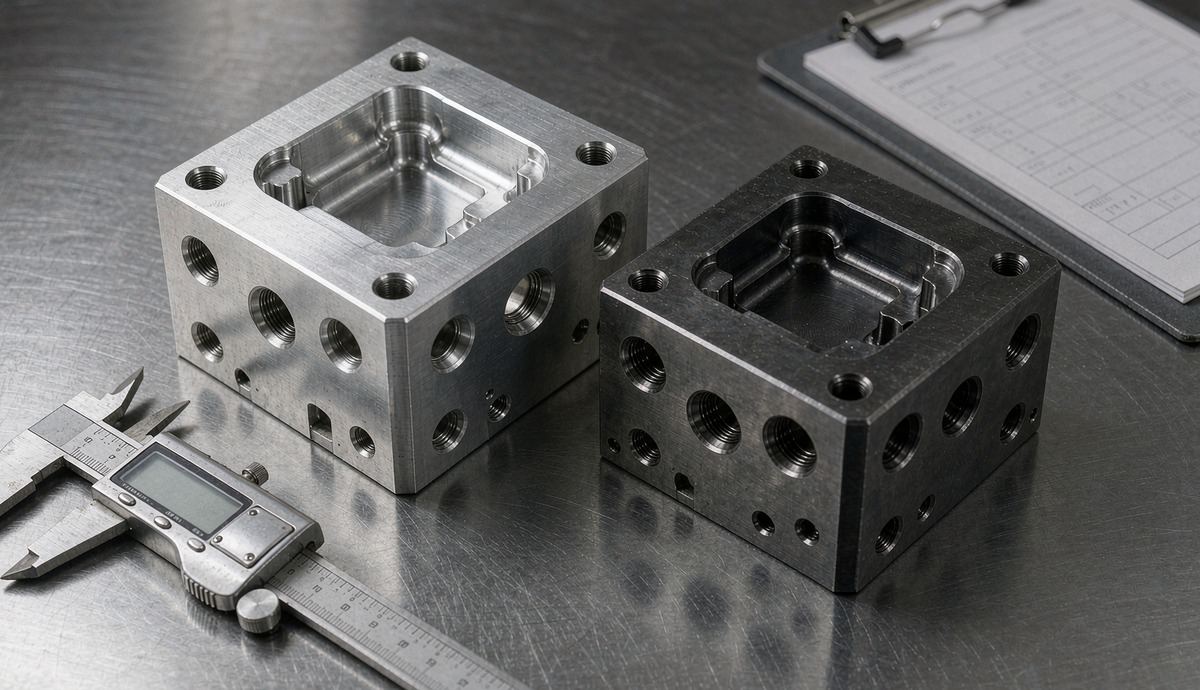
A frequent roadblock in legacy product support is missing documentation: the equipment was launched in 2004, original 3D CAD files were lost during an ERP migration, or the only surviving reference is a worn physical sample pulled from a field machine. Modern reverse engineering turns a single physical sample into a production-ready mold in under two weeks:
- High-Resolution 3D Optical / Blue-Light Scanning & CMM Probing: Captures complex freeform contours to +/- 0.025 mm accuracy while CMM touch-probing locks in critical bore diameters, boss centers, and snap-fit datums.
- Parametric CAD Reconstruction & Wear Compensation: Engineers rebuild clean, watertight STEP files—restoring worn gear teeth, broken tabs, or warped walls back to nominal engineering intent rather than blindly copying field damage.
- Polymer Identification (FTIR / DSC Lab Testing): If the original resin datasheet is missing, infrared spectroscopy identifies the exact base polymer, filler percentage, and flame-retardant class so we can specify a current drop-in virgin resin.
- Shrinkage & DFM Optimization: Before cutting the MUD insert, we apply exact polymer shrinkage compensation and simplify obsolete over-complex side actions into cleaner hand-loaded inserts to keep low-volume tooling cost minimal.
Managing Resin Obsolescence and Regulatory Re-Qualification
Over a 15-year legacy lifecycle, original resin grades are frequently discontinued by chemical producers or restricted under updated RoHS, REACH, or UL94 regulations. Substituting a random commodity resin without engineering verification causes dimensional mismatch (different mold shrinkage rate), premature stress cracking, or failed agency compliance.
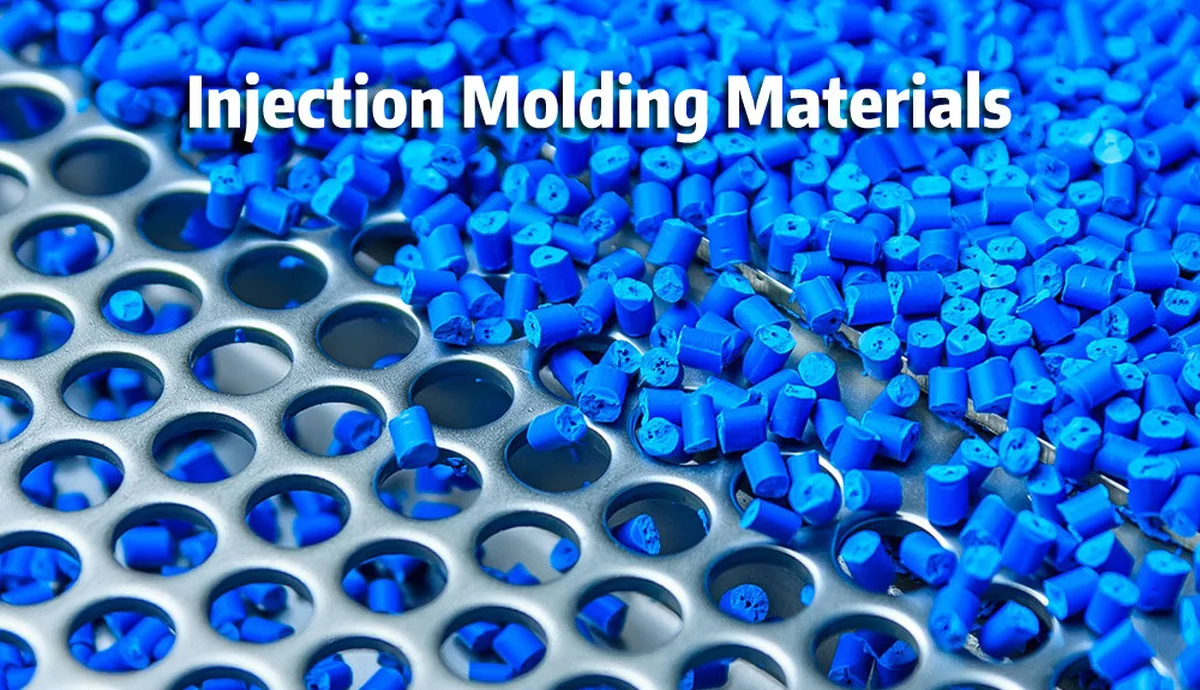
When qualifying a drop-in replacement resin for legacy spare parts, our materials engineers verify four equivalency benchmarks: identical nominal mold shrinkage (+/- 0.1% so existing mating housings snap cleanly), matching tensile/flexural modulus and heat deflection temperature (HDT), equivalent UL94 flame rating and chemical resistance, and full virgin resin lot traceability (COA). Review full polymer trade-offs in our injection molding materials selection guide.
Digital Inventory & On-Demand Replenishment Workflow
The highest-ROI aftermarket programs treat stored MUD inserts as a physical-digital hybrid inventory. Once a legacy spare-part insert passes First Article Inspection (FAI) and dimensional sign-off, DJmolding cleans, applies rust-preventive coating, barcodes, and stores the insert inside our climate-controlled tool library alongside its locked digital press-recipe (temperature, injection speed, packing pressure, and cooling time).
Whenever your ERP inventory hits reorder point—whether 150 brackets or 600 connector housings—you issue a simple release PO. Within 7 to 14 business days, our technicians slide the barcoded MUD insert into the master frame, load the validated digital press profile, run your exact batch with full lot traceability, inspect critical-to-quality (CTQ) dimensions, and ship directly to your distribution hub. You pay zero warehouse rent on idle parts and zero annual obsolescence write-offs.
Family Molds vs. Dedicated MUD Inserts for Multi-Part Legacy Kits
When a legacy service kit includes four or five small plastic components made from the exact same resin (for example, a lever, cover, clip, and spacer replaced together during scheduled maintenance), buyers often ask whether to cut a single family mold or individual MUD inserts. A family mold produces one complete kit per machine cycle at the lowest upfront tooling cost—provided all parts share similar wall thickness and flow balance—whereas individual MUD inserts with shutoff gates give independent quantity control when one wear component sells 5x faster than the rest of the kit. Compare both strategies in detail in our single-cavity, multi-cavity, and family molds strategy guide and injection molding cost and quoting guide.
Frequently Asked Questions About On-Demand Spare Parts Molding
What is the minimum order quantity (MOQ) for on-demand low-volume injection molding?
With aluminum or P20 MUD insert tooling stored at our facility, on-demand replenishment batches can run as low as 100 to 500 pieces per release without high-volume setup penalties—making true just-in-time aftermarket fulfillment practical for slow-moving legacy SKUs.
When should I use 3D printing instead of low-volume injection molding for spare parts?
Choose industrial 3D printing (SLS/MJF) when total remaining lifetime demand is under ~200–250 pieces, cosmetic surface finish is non-critical, and standard PA12 meets mechanical needs. Choose on-demand low-volume injection molding whenever lifetime volume exceeds ~250–300 units, exact OEM engineering resins (PC, ABS, PA66 GF30, UL94 V-0) are mandatory, or tight tolerances and matched SPI/VDI/Mold-Tech surface finishes are required.
Can you mold a legacy spare part if I only have a broken physical sample and no 3D CAD?
Yes. Through 3D optical scanning, CMM dimensional probing, and FTIR polymer identification, our engineers reconstruct a clean parametric STEP model, compensate for field wear, match the original thermoplastic chemistry, and cut a validated low-volume mold without needing original legacy drawings.
How long does an aluminum MUD insert last for aftermarket spare parts?
A 7075 or QC-10 aluminum MUD insert typically delivers 5,000 to 25,000+ shots in unfilled thermoplastics (ABS, PP, PC, POM). If your legacy part uses abrasive glass-filled nylon (PA66 GF30) or requires 25,000–100,000 lifetime units, upgrading the interchangeable insert to pre-hardened P20 steel inside the same master frame extends tool life cleanly at modest extra cost.
How do I transfer an existing legacy mold or start a low-volume spare parts program?
Start by auditing your top 20 slow-moving or out-of-stock plastic SKUs by annual demand, resin type, and current stockout cost. You can either ship salvageable existing molds for refurbishment and press qualification, or consolidate small-to-medium legacy SKUs onto standardized aluminum/P20 MUD inserts for rapid 7-to-14-day on-demand replenishment. Learn more about partner selection in our low-volume injection molding supplier overview.
Launch Your On-Demand Legacy Spare Parts Program with DJmolding
Keeping legacy equipment supported for a decade or longer should strengthen customer loyalty and aftermarket margins—not drain working capital into dusty warehouse shelves or emergency broker fees. Combining aluminum/P20 MUD insert tooling, reverse-engineering capability, and locked digital press recipes turns unpredictable spare-parts demand into a lean, responsive supply chain.
At DJmolding, we partner with global OEMs across industrial equipment, automotive (IATF 16949 / PPAP), electronics, and medical sectors to deliver low-volume aluminum and P20 MUD tooling, 3D-scan reverse engineering, climate-controlled tool storage, and 7-to-14-day on-demand spare parts molding in 100% certified OEM resins.
Have discontinued plastic SKUs, worn-out legacy molds, or costly All-Time Buy quotes on your desk? Visit DJmolding today to share your CAD files or physical samples for a complimentary break-even ROI analysis, MUD insert tooling quote, and on-demand replenishment plan.
