


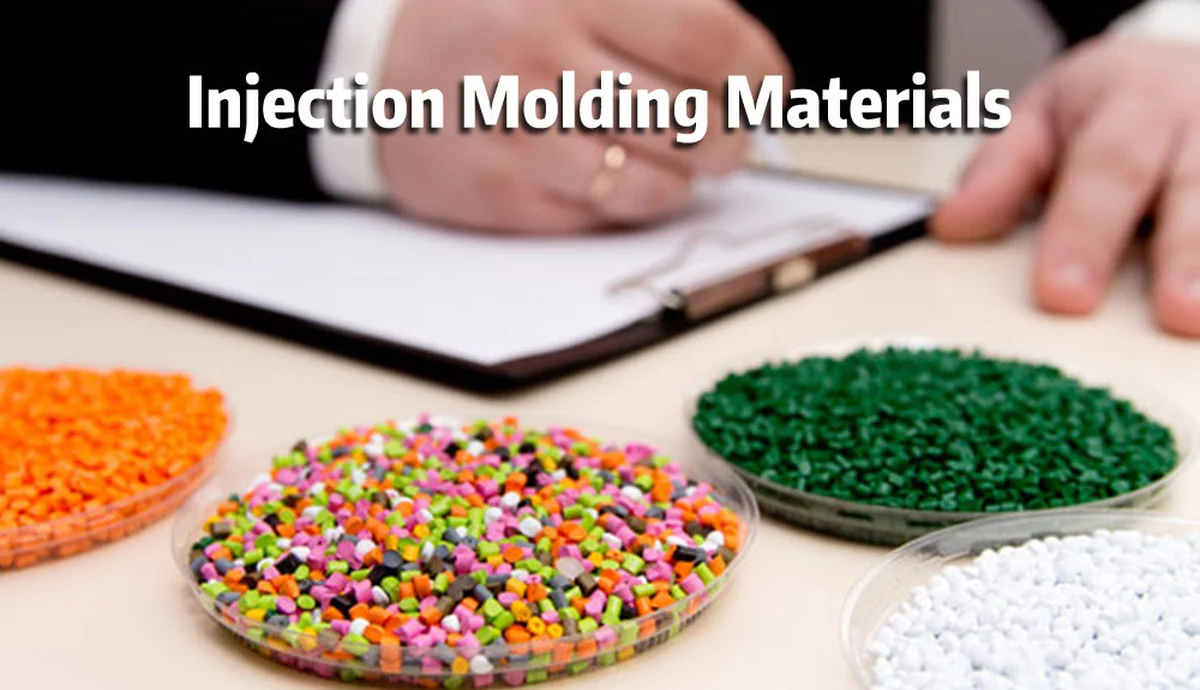
Injection Molding Materials Selection Guide for Engineers and Buyers
Injection molding material selection is a joint engineering and purchasing decision. Engineers must show that a specific resin grade can meet loads, temperature, exposure, appearance, and dimensional requirements in the finished part. Buyers must show that the same grade can be sourced consistently, processed at the planned volume, documented, and replaced only through an approved change. A polymer family name alone answers neither question.
This guide provides a practical sequence for moving from a part requirement to an approved production material. It is designed for engineers comparing performance and for buyers comparing quotes, lead times, quality evidence, and supply risk. The emphasis is on decisions and records that prevent a promising sample from becoming an unreliable production program.
What should a material decision actually specify?
A production material specification should identify the resin manufacturer, exact commercial grade, filler or reinforcement level, color formulation, permitted regrind policy, required certifications, and approved alternatives. It should also identify which properties the finished part must pass and under what test conditions. Two grades called “PC” or “PA66” can differ in impact modification, flame rating, flow, stabilization, and shrinkage. Substituting one for the other without evaluation can change the part even when the family name stays the same.
The decision should be expressed as a controlled requirement rather than a casual note on a drawing. A buyer can then compare quotes on the same grade and documentation basis, while an engineer can connect material data to actual performance tests. If an alternative grade is allowed, define the approval path before tooling is cut: technical data comparison, molding trial, dimensional review, functional testing, and written release.
1. How do engineers turn part function into screening criteria?
Start with the functions that would make the part fail if they were lost: carrying a load, sealing, snapping into place, transmitting light, insulating electricity, or resisting a fluid. Record the load direction, duration, temperature, environment, and expected life for each function. A housing that only protects a circuit during assembly has a different material problem from a clip that remains strained for years. This distinction prevents an impressive tensile-strength number from dominating the wrong decision.
Separate mandatory requirements from preferences. A specified flame classification, food-contact requirement, or critical tolerance may be a gate: a grade either qualifies or does not. Appearance, unit cost, or weight may then distinguish qualified options. A short requirement table should include the test method and acceptance limit for every gate. Without a defined test condition, suppliers may quote different grades against different interpretations of “strong,” “heat resistant,” or “medical grade.”
2. Which material properties predict real part performance?
Mechanical properties should match the way the part is loaded. Tensile strength describes one loading mode; flexural modulus helps compare stiffness; impact data addresses rapid loading; fatigue and creep address repeated or sustained loading. A rigid resin can be useful for a structural bracket yet unsuitable for a living hinge. A tough resin can survive a drop yet deflect too far under a continuous clamp load. Engineers should rank the relevant properties rather than seek a single highest number.
Temperature changes the comparison. Datasheet values often come from standardized specimens measured under specified conditions, while a production part has ribs, weld lines, gate effects, and variable wall sections. A short heat excursion is different from years of continuous exposure. Request property data at the expected operating temperature where available, and test the molded geometry under representative load. The final decision should be based on the part’s performance envelope, not a room-temperature value viewed alone.

3. How should chemical, moisture, and outdoor exposure be tested?
Chemical compatibility is specific to the fluid, concentration, contact time, temperature, and stress state. A material that tolerates a brief wipe may crack when held under strain and exposed repeatedly to the same cleaner. List every expected oil, detergent, disinfectant, adhesive, fuel, or process fluid. Then compare candidate grades using supplier guidance and a test on stressed, production-like samples. General labels such as “chemical resistant” do not establish suitability for an actual service condition.
Moisture and ultraviolet exposure require separate decisions. Some resins absorb water and change dimensions or mechanical behavior; outdoor parts may also need UV-stabilized grades and color validation. The buyer should ask whether a quoted grade includes the needed stabilizer and whether the supplier’s documentation applies to the exact color and formulation. An indoor natural-color qualification cannot automatically approve an outdoor black or brightly colored version.
4. When do dimensional stability and appearance outweigh strength?
Dimensional stability becomes decisive when a part must align with a connector, seal against a mating surface, or maintain a precision fit. Shrinkage, anisotropy, moisture uptake, creep, and fiber orientation can affect the molded dimensions after ejection and after conditioning. A resin with higher nominal strength may create a harder tooling problem if it warps around asymmetric ribs. The engineering comparison should therefore include the measurement state, such as immediately after molding or after conditioning at a defined temperature and humidity.
Appearance has its own material constraints. A transparent cover needs optical clarity and control of flow marks; a textured housing may prioritize color consistency and surface finish; a paintable or plated part must be compatible with the planned secondary operation. Cosmetic acceptance should specify viewing distance, lighting, sample standard, permitted defects, and critical surfaces. This converts subjective comments into a shared inspection basis for supplier and buyer.
5. What is the right way to compare common resin families?
Use resin families to make an initial shortlist, then compare exact grades. PP may suit lightweight parts and many chemical environments, while ABS is often considered for molded housings that need a controlled cosmetic finish. PC can be considered for toughness or transparency; PA and POM are often screened for mechanical and wear functions; PBT or PPS may enter a shortlist when electrical or thermal requirements rise. Each family also contains grades that differ sharply in additives, processing behavior, and approvals.
The most useful comparison is conditional. For a snap-fit cover, compare repeated deflection and impact behavior alongside wall design. For a sliding component, compare friction, wear, moisture effects, and mating material. For a chemical container, compare exposure and sealing with cost and moldability. This approach avoids declaring any family universally “best.” The site’s existing introductory material selection article and common resin overview provide background on families; this guide develops the approval process that follows the shortlist.
6. When is a filled or reinforced grade justified?
Glass fiber, mineral filler, and impact modifiers change a material’s property balance. Reinforcement can raise stiffness or reduce some forms of dimensional movement, but fiber orientation can make shrinkage directional and affect weld-line strength and surface appearance. A filled grade may also increase tool wear and alter gate, venting, or cooling decisions. The buyer should compare the full molded-part cost and expected tool maintenance, not only the pellet price or a headline modulus value.
Specify filler type and percentage as part of the grade identity. “PA66” is not an adequate substitute for “PA66 with a defined glass-fiber content,” and two nominally similar filled grades may produce different warpage or appearance. Ask the molder to evaluate the proposed gate location and fiber direction against the part’s critical load path. If the reinforced option only solves a stiffness problem created by geometry, a design change may be cheaper and more robust.
7. How does the resin choice change mold design and processing?
Material selection affects melt flow, shrinkage allowance, venting, gate size and position, cooling, ejection, and the risk of weld lines or sink marks. A material change after tool approval may require insert changes, revised cooling, or a new process window. Engineers and buyers should therefore freeze a production grade before final tool steel decisions whenever possible. If multiple grades remain under evaluation, the tool review should document the compromise and the cost of each later change.
Processing capability is part of qualification. Some materials require controlled drying before molding; others may demand higher melt or mold temperatures, corrosion resistance, or special handling. Request a proposed process window, drying controls, and evidence that the selected press and tool can run the grade consistently. DJmolding’s DFM guide explains how wall thickness, ribs, bosses, draft, and undercuts shape moldability; resin selection should be reviewed against those geometry rules in the same engineering meeting.
8. How should buyers compare material cost without choosing the cheapest pellet?
Delivered part cost includes more than price per kilogram. Density affects part mass, flow and cooling affect cycle time, scrap affects usable output, and process controls affect labor and energy. Tool design, wear, finishing, testing, and inventory also matter. A lower-priced resin may be more expensive if it needs a thicker wall, longer cycle, or higher reject rate. A higher-priced grade can be economical if it reduces assembly work or field failures.
Ask suppliers to quote on a common basis: exact grade, annual volume, batch size, cavity count, expected cycle, process scrap assumption, regrind policy, packaging, inspection, and logistics. Separate the material-price assumption from conversion and tooling charges. For volume planning, compare at least a base case and a demand-change case. The site’s injection molding cost guide helps buyers normalize tooling and piece-price assumptions before using a resin price difference to make the final decision.
9. What documentation should accompany an RFQ?
A usable request for quotation should contain the current 3D model, controlled 2D drawing, revision, target resin or candidate grades, application environment, annual demand, batch size, target markets, critical dimensions, cosmetic standard, and required tests. If the grade is open, state the performance gates and invite a documented recommendation. If the grade is locked, state whether an alternative may be quoted separately. This keeps the supplier’s engineering suggestion visible rather than silently changing the purchasing basis.
Request a technical datasheet for the exact grade, relevant safety and compliance documents, color or masterbatch identification, material origin and traceability method, and any required declarations. A generic polymer datasheet is insufficient for a grade-specific regulatory claim. For regulated applications, identify the applicable market and intended use so that evidence is reviewed against the correct requirement. The site discusses related documentation in its medical molding compliance article; buyers should apply the same discipline of exact scope and traceability to their own industry.
10. How do engineers qualify a grade on production-like parts?
Qualification should follow the risks identified in the requirement table. First, compare grade data and screen out candidates that cannot meet mandatory limits. Next, perform a DFM review and mold-flow or filling assessment when geometry or process risk warrants it. Then mold samples using documented material lots and processing conditions. Measure dimensions after the specified conditioning period and run functional tests on the molded part, including exposure, load, assembly, or cosmetic checks that represent use.
A prototype from a different process can confirm fit and concept, but it does not prove that the selected resin will perform in a production injection mold. Even a molded sample may not represent stable production if the tool, press, gate, drying, or process settings later change. Agree on a first-article or pilot acceptance plan that records critical dimensions, visual limits, test results, material lot, and process conditions. Release production only after failures and open deviations have owners and dispositions.
11. How should production teams control resin substitutions?
Substitution control protects both engineering intent and purchasing continuity. An alternate grade may offer better availability or price, but it can change color, shrinkage, strength, flame behavior, or documentation status. Create an approved-material list with the exact grade and revision, then require a written change request before switching supplier, grade, filler, colorant, or recycled-content level. The change request should state why the change is needed and which tests must be repeated.
For a low-risk cosmetic component, a data review and limited molding trial may be enough; for a tight-tolerance, safety-related, or regulated component, a broader requalification may be necessary. This risk-based distinction prevents both casual substitution and unnecessary blanket retesting. Buyers should ask about dual sourcing early, but a second source becomes genuinely useful only when its material and production process have been approved against the same acceptance criteria.
12. When can recycled content be used responsibly?
Recycled content can support a program’s material goals when its source, allowable percentage, property variation, color, contamination controls, and traceability are defined. Internal regrind from the same controlled resin stream is a different proposition from externally sourced recycled pellets. Neither should be assumed equivalent to virgin material without a qualification plan. The suitable route depends on the part’s performance margin, cosmetic demand, regulatory scope, and lot-to-lot variation.
Specify whether recycled content is permitted, its source and maximum fraction, how it is blended, and what evidence is required for each lot. Test the finished molded part against the same functional and appearance limits used for virgin resin. If a sustainability claim is planned, the buyer should also establish the evidence needed to support that claim in the target market. The site’s recycled plastic injection molding page offers additional context for discussing this route with a manufacturing team.
What does a practical engineer-and-buyer comparison matrix look like?
A comparison matrix should place the application requirement beside the evidence for each candidate grade. Use columns for required performance, test method, grade data, molded-part result, process risk, material availability, total cost, and approval status. A simple red/amber/green screen can help prioritize questions, but it should never replace the actual test result or the documented reason for approval. A grade that fails a mandatory requirement should not win because its purchase price is attractive.
| Decision question | Engineering evidence | Buying evidence |
|---|---|---|
| Will the part work in service? | Load, heat, exposure, dimensional, and assembly tests on molded parts | Warranty exposure and agreed acceptance limits |
| Can the grade run consistently? | Process window, drying, shrinkage, warpage, and first-article results | Yield, cycle, tool wear, and capacity assumptions |
| Can supply be maintained? | Approved alternative and requalification plan | Lead time, lot traceability, inventory, and change notice |
| Is the program economical? | Design and process changes needed for each option | Tooling, conversion, scrap, freight, and lifecycle cost |
The matrix is most valuable before a tool is finalized. It exposes missing evidence while geometry, material, and supplier choices can still be changed with relatively low disruption. At a design review, the engineer can explain the functional trade-off, the molder can explain the process trade-off, and the buyer can explain the sourcing and cost trade-off. A dated approval record then gives everyone the same basis for future changes.
What mistakes most often weaken a material decision?
The first mistake is specifying only a broad family, such as “ABS or equivalent,” when the product depends on a particular impact level, color, flammability result, or approval. The second is selecting a resin solely from room-temperature datasheet values while ignoring weld lines, sustained stress, conditioning, and the finished geometry. The third is approving a sample without recording its material lot and molding conditions. Each mistake breaks the link between the nominal material choice and the delivered production part.
A related mistake is treating a lower resin price as a lower piece price. Changed cycle time, wall thickness, reject rate, or tool wear can reverse that calculation. Another is postponing alternate-source planning until a shortage occurs, when qualification time is scarce. A controlled shortlist, a common RFQ package, and a staged validation plan address these problems before they become launch delays. For projects with tight tolerances, the site’s supplier audit guide adds questions about measurement and process capability.
Frequently asked questions
Should engineers choose the resin before requesting a quote?
Engineers should define the part’s mandatory performance and a preferred grade before a production quote where possible. If the grade remains open, the RFQ should name candidate families and specify the tests that will decide among them. A supplier can then price the preferred option and propose a separately identified alternative. This produces comparable quotes without excluding useful manufacturing input.
Can two grades with the same polymer name use the same mold?
Two grades with the same family name may require different processing conditions or produce different shrinkage, warpage, surface finish, or mechanical behavior. A shared mold may be feasible, but it should be confirmed through grade data, tool review, and molded trials. The more demanding the tolerance and appearance requirements, the less safe it is to assume interchangeability from a family label alone.
Which test matters most when comparing materials?
The most important test is the one linked to the dominant failure mode of the finished part. For a loaded clip, sustained deflection or cycle testing may matter more than a tensile coupon; for a transparent cover, optical and impact tests may dominate; for a fluid-exposed housing, stressed chemical exposure may be decisive. A test plan should cover all mandatory requirements, with priority set by consequence and likelihood of failure.
How many candidate grades should a team evaluate?
A short list of two or three plausible grades is usually easier to compare rigorously than a long list of loosely defined materials. Initial screening should remove grades that fail hard requirements, are unavailable in the target market, or cannot be processed within the project’s constraints. The remaining candidates can then receive focused molded-part tests and commercial comparison.
Work with DJmolding on a material-ready molding program
DJmolding provides custom plastic injection molding, tooling, and related production services for B2B projects. If your team is selecting a resin for a new part or reviewing an existing design, send the controlled CAD and drawing package, expected service conditions, candidate grades, annual volume, and required quality evidence. A shared engineering and purchasing brief makes it easier to evaluate material, tooling, process, and quotation assumptions together.
Ready to discuss a production project? Contact DJmolding with your application requirements and sourcing timeline. The team can review manufacturability and the proposed molding scope so your next material decision has a clear route from sample to repeatable B2B supply.
