

Liquid Silicone Rubber (LSR) Injection Molding: The Complete B2B Buying Guide
How should a B2B buyer source a liquid silicone rubber (LSR) injection-molded part? First define the part’s job, service environment, annual demand and acceptance tests. Then compare LSR with compression-molded silicone and thermoplastic elastomers, review the proposed mold and production cell, and request a quote that separates tooling, material, processing and validation costs. A low unit price is not useful if the supplier has not agreed how the seal will be measured, how flash will be controlled or who owns the tool.
This guide is for product engineers, OEM procurement teams and distributors buying custom silicone components. It focuses on decisions that happen before and after a purchase order: material grade, design for manufacturability, tooling architecture, sample approval, supplier evidence and repeat-order control. For a process-level explanation, see DJmolding’s existing LSR injection molding service overview. The present guide instead turns the process into an actionable buying specification.
LSR buying guide: the decision in one table
| Buyer question | Evidence to request | Decision affected |
|---|---|---|
| Does the application actually need LSR? | Functional requirements, environment and comparison with alternatives | Process and material selection |
| Can the design be molded and released reliably? | Revision-controlled DFM report with gate, vent, parting line and demolding plan | Tool design and defect risk |
| Is the material grade appropriate? | Grade identity, hardness, property data and application-specific evidence | Performance and regulatory suitability |
| Can the supplier run production LSR? | Meter-mix equipment, thermal separation, mold trials and process records | Capability and repeatability |
| What is the real program cost? | Itemized tooling, unit, inspection, post-cure, scrap and logistics terms | Budget and volume break-even |
| How will good parts be accepted? | Measurement method, golden sample, defect limits and change control | Launch approval and supply continuity |
What is the most important buying principle? Require every quote to refer to the same drawing revision, material specification, volume forecast and inspection method. Otherwise a cheaper quote may simply exclude post-curing, critical-dimension measurement, clean handling or spare tooling. The buyer should resolve those exclusions before comparing price per piece.
What is LSR injection molding, and when is it the right process?
What makes LSR different from ordinary plastic injection molding? Most LSR systems use two liquid components that are proportioned, mixed and injected into a heated mold, where they crosslink into an elastomer. Thermoplastic pellets instead melt in a hot barrel and solidify in a cooler tool. That reversed thermal logic affects equipment, gates, shrinkage, venting and demolding. A supplier with only conventional thermoplastic presses cannot be assumed to have a qualified LSR process.
Which parts are plausible LSR candidates? Seals, gaskets, valves, flexible connectors, keypads and soft-touch features can benefit when elasticity, temperature resistance, electrical insulation or intricate molded detail matters. The application must still be checked against the selected grade and finished-part tests. The word “silicone” does not prove that a part is suitable for food contact, medical use, sterilization or any particular chemical exposure.
When may LSR be the wrong answer? A very simple, low-volume silicone component may be more economical in compression molding. A soft grip with modest temperature and chemical demands may be feasible in a thermoplastic elastomer. A rigid load-bearing housing normally belongs in a thermoplastic process. Compare the whole product duty and production volume before paying for a precision LSR mold. Do not use a universal annual-volume threshold; geometry, labor, material cost and tool complexity determine the break-even point.
LSR versus compression molding versus TPE: what changes for the buyer?
| Route | Commercial strength | Key limitation to test |
|---|---|---|
| LSR injection molding | Repeatable dosing, automation and complex elastomer features | Higher tooling and dedicated process requirements |
| Compression-molded silicone | Often attractive for simple shapes or lower volumes | Labor, flash finishing and cycle consistency |
| Thermoplastic elastomer molding | Thermoplastic processing and sometimes simpler integration | Elastic recovery, heat exposure and long-term compression behavior |
How should a buyer make the comparison fair? Specify the same functional test for all three routes: for example, seal force after defined compression and aging, not just new-part hardness. Compare tooling amortization, expected yield, finishing labor, assembly steps and warranty risk at the forecast volume. Material names alone cannot settle this decision because grades within each family behave differently. DJmolding’s broader injection versus compression molding comparison can support an early process discussion.
How should an LSR part be specified before requesting quotes?
What should the design package contain? Send a revision-controlled 3D CAD file, a dimensioned 2D drawing, material and color requirements, expected annual and lifetime volumes, intended use, assembly environment and a list of critical-to-function characteristics. Mark the sealing faces, cosmetic faces and surfaces that may tolerate a gate vestige or parting-line witness. A supplier cannot price a precise mold or inspection plan from an unannotated STEP file alone.
How should hardness be stated? Specify the test scale, target and tolerance, and connect hardness to the actual part function. A Shore A number does not by itself define seal force, tear resistance, compression set or feel. If the part works by elastic deflection, provide the assembled gap and load case. If it contacts a fluid or must survive cleaning, identify the exposure and required evidence. The supplier can then propose grades without guessing at the end-use requirement.
What belongs in the drawing besides dimensions? State the datum scheme, measurement temperature, conditioning time after molding, inspection orientation and the method used for deformable features. Flexible silicone can change apparent dimensions under a caliper’s contact force. A buyer should distinguish free-state dimensions from dimensions measured in a fixture or assembled condition. The tighter the tolerance, the more important this agreement becomes.
Which LSR design choices control tool risk?
Why start with the parting line? The parting line is where mold halves meet, and LSR’s ability to enter small gaps makes this location central to flash control. Place it away from critical sealing contact whenever possible. If a witness line must cross a functional area, define the maximum acceptable flash and the inspection method before cutting steel. A drawing note that merely says “flash-free” is ambiguous unless an allowable limit and measurement approach are included.
Why do gate and vent positions matter together? The gate introduces mixed LSR into the cavity; the vents allow displaced air to leave. Poor balance can leave short fills, air marks or flash even when the material grade is correct. Ask the molder to identify the gate vestige and last-to-fill regions on the DFM report. A gate on a visible or sealing surface may create unnecessary trimming or cosmetic rejection, while an under-vented thin lip may not fill consistently.
Do LSR walls need the same rules as rigid plastics? No. Liquid silicone can flow through thin sections, and thick sections do not create thermoplastic-style sink in the same way. However, thicker sections can lengthen cure and increase material cost; very thin sections can tear during demolding or use. The correct wall is therefore determined by the selected grade, flow path, functional load and removal method, not a generic plastic rib ratio. DJmolding’s thermoplastic DFM guide is useful as a contrast, but its numerical rules should not be copied into an LSR drawing.
Can LSR parts have undercuts without slides? Often they can, because the cured elastomer flexes during removal. That is not a blanket permission for deep hooks or thin lips. Demolding strain can tear the part, distort dimensions or slow the cycle. Ask for a release sequence that shows which mold half retains the part, where a person or robot grips it and whether the feature recovers after ejection. The risk must be tested in the target grade, not inferred from CAD flexibility alone.
How should shrinkage be handled? Use the material supplier’s grade data as a starting point and confirm finished dimensions with the actual tool and cycle. LSR can expand in the heated cavity and shrink after demolding and cooling, so thermoplastic shrinkage assumptions do not directly transfer. Post-curing, if required, may change dimensions further. A steel-safe tool strategy should identify which critical surfaces can be adjusted after the first trial without rebuilding the mold.
What is inside an LSR production cell?
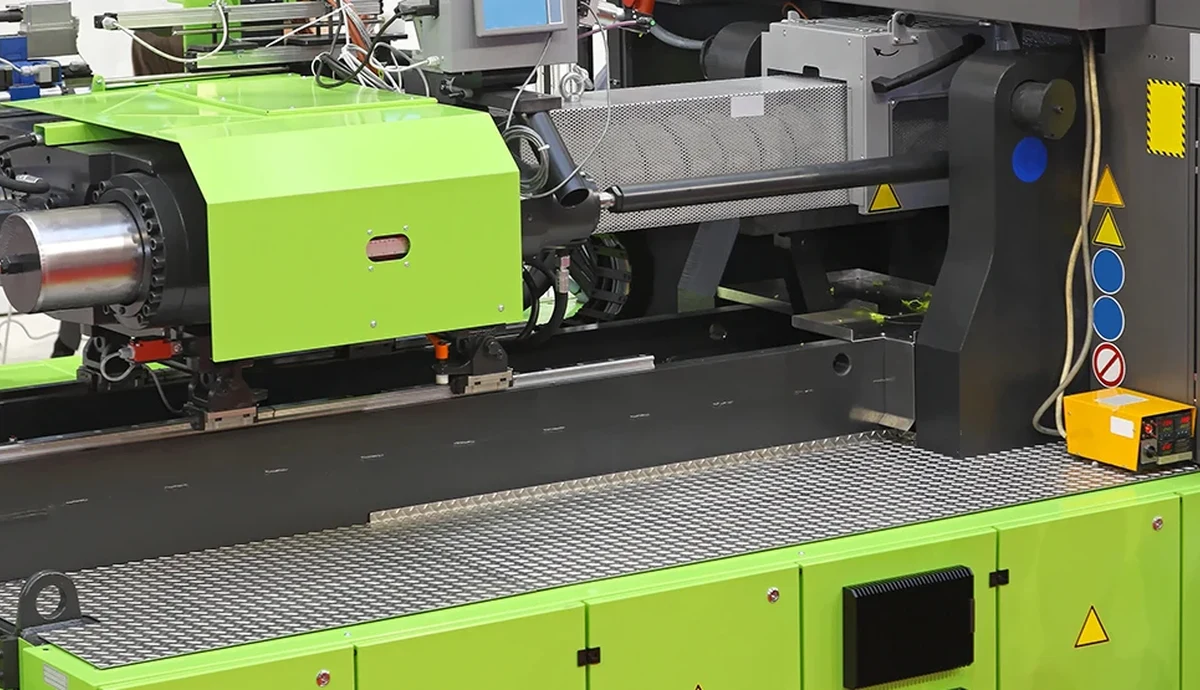
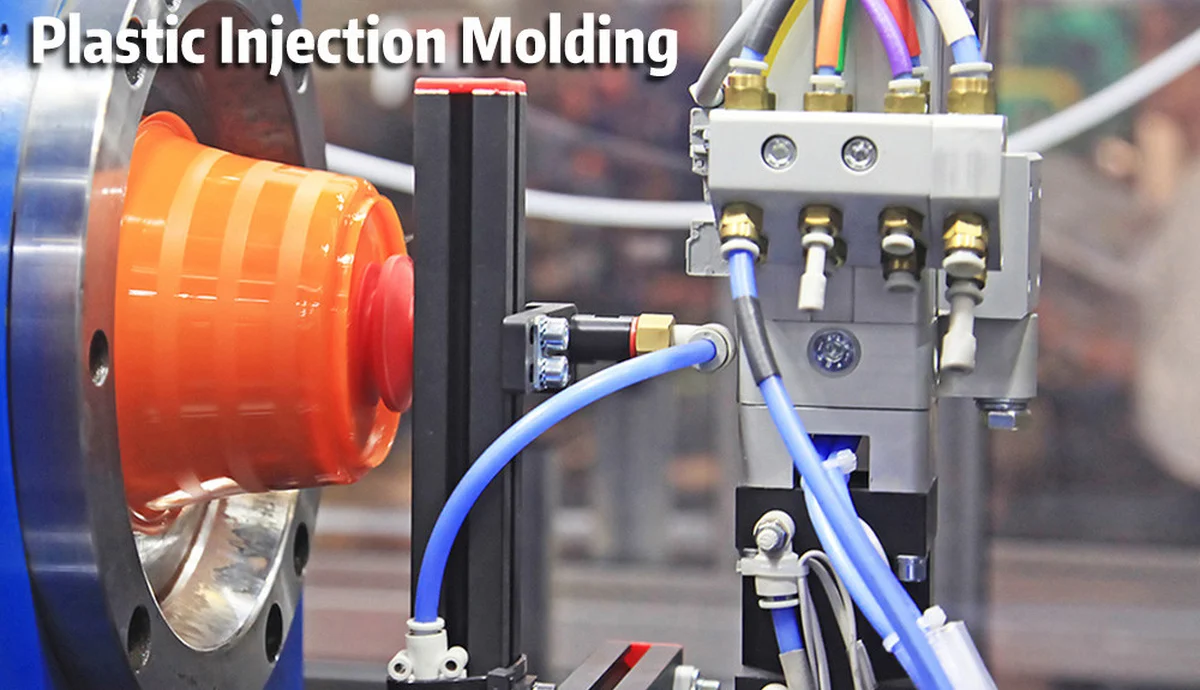
Which equipment demonstrates a real LSR process? A production cell normally includes separate material supplies, a proportioning and mixing system, a controlled injection unit, a tool with suitable thermal separation and a heated cure zone. The exact configuration varies by part and grade. Ask for an equipment list, capacity, shot-size range, mixing and cleaning procedure, mold-temperature control and in-process checks. A generic press photo cannot prove that the quoted project has access to these capabilities.
Why is thermal separation important? The mixture should remain processable in the feed system but cure in the cavity. If the cold side runs too hot, material may start curing before it reaches the part; if the hot side loses too much heat near the gate, the part may not cure uniformly. The tool quotation should identify the runner approach, temperature-control provisions and maintenance responsibilities. This is one reason an LSR mold cannot be evaluated solely by cavity count and steel weight.
When should post-curing be quoted? Post-curing is a separate controlled heating step used for certain material-property or application requirements. It is not automatically necessary for every LSR part, and it should never be silently assumed or omitted when the end-use specification requires it. Ask the material supplier and molder which grade and finished-part evidence determine the need, then include any oven time, shrinkage allowance, handling and inspection in the quote.
How should buyers evaluate LSR material and compliance claims?
Does “medical grade” or “food grade” approve a finished part? No. Such labels often describe a material family’s intended market, not the result of a finished-part assessment under the buyer’s use conditions. Request the exact material grade, current supplier documentation, processing requirements and the tests applicable to the finished article. Consider colorants, primers, post-cure conditions, packaging and contact duration where relevant. The buyer must define the target market and use so the evidence can be evaluated against a real requirement.
Which property data matters most? Match the data to failure modes. A static gasket may need compression-set and leak-performance evidence; a flexing membrane may need fatigue and tear behavior; a consumer grip may need color and tactile consistency; an electrical component may need insulation and temperature evidence. Hardness, tensile strength and elongation are useful screening numbers but do not replace a test on the molded geometry.
Why ask about cure inhibition and contamination? Platinum-cured systems can be sensitive to certain contaminants, and mixed-material production can introduce handling risks. Ask how the molder segregates material, controls pigment dosing, manages storage life and cleans the mixing path. If the project includes overmolding, confirm that the substrate, adhesive strategy and processing sequence have been trialed together. A material certificate for the silicone alone cannot prove adhesion to a specific insert.
How should LSR overmolding and two-shot parts be purchased?
What is the design question for a silicone-over-plastic part? The buyer must decide whether the assembly depends on chemical adhesion, mechanical retention or both. A soft layer touching a hard substrate is not proof of a durable bond. Specify peel, pull, leak or functional tests after aging and environmental exposure. Then define which supplier makes the substrate, who controls its surface condition and who owns final assembly quality.
Why is substrate selection consequential? The substrate must survive the relevant thermal and mechanical process, and its chemistry affects adhesion. A successful bond to one grade of plastic does not automatically extend to a visually similar grade, a regrind blend or a different surface finish. Require the bill of materials and any surface treatment to be revision controlled. DJmolding’s two-shot and multi-material design article explains broader interface decisions.
What belongs in an LSR tooling quotation?
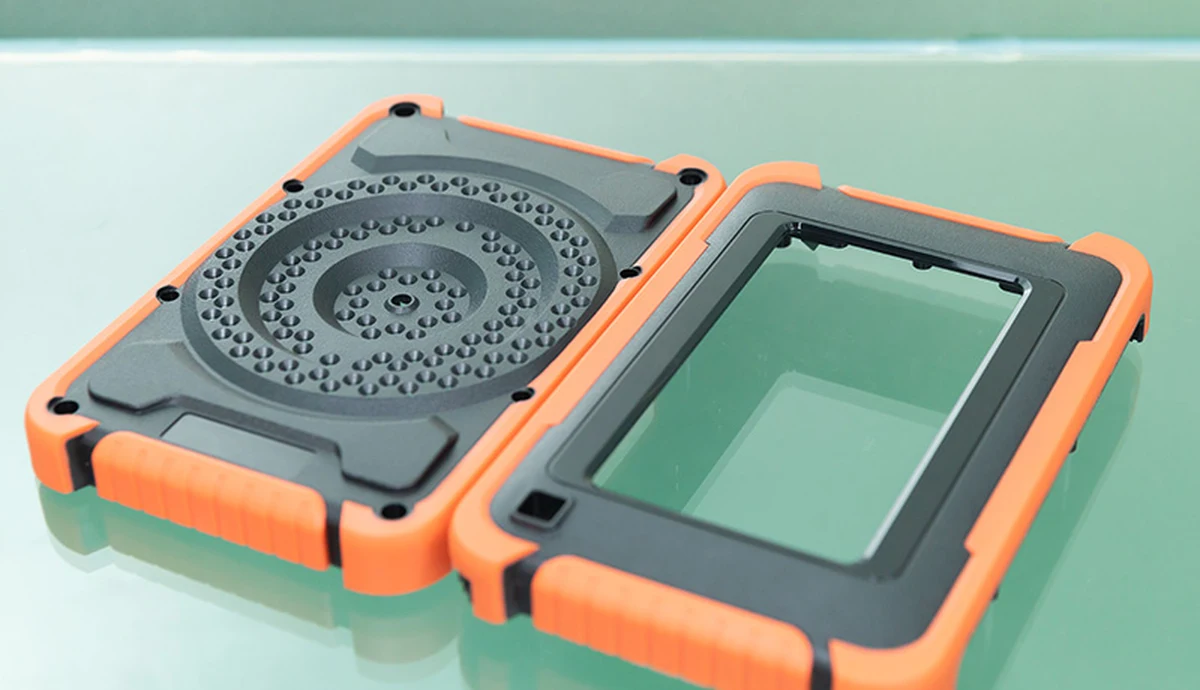
Which line items should be visible? Ask for mold architecture, cavity count, runner and gate system, venting method, thermal controls, insert mechanisms, expected tool life and maintenance scope. Separate the initial tool from sample trials, fixture and gauge costs, spare components, engineering changes, and shipping. State who owns the steel, drawings and replaceable inserts, and what happens if the mold must move to another qualified molder.
How should cavity count be chosen? More cavities can reduce conversion cost per part but make balancing, venting, inspection and tool maintenance more demanding. The buyer should compare forecast demand with realistic yield and cycle time. A four-cavity quote may look inexpensive per part only because it assumes perfect balance and no manual handling. Require the supplier to state its capacity calculation and the first-trial plan for proving all cavities.
How should tool changes be controlled? Agree on a design-freeze point, a steel-safe adjustment allowance, a trial schedule and the price of changes after approval. Label which dimensions may be tuned at the first trial and which features would require welding or replacement inserts. This prevents a late debate over whether a dimension correction is included in the tool price or is a buyer-requested redesign.
How can a buyer compare the real LSR unit cost?
What is a useful cost model? The landed cost per accepted part includes silicone consumed, processing time, labor, post-curing or trimming, inspection, packaging, scrap and freight. Tooling and validation should be shown separately as upfront investment and optionally amortized over the expected volume. The denominator is saleable parts, not shots produced. Comparing two quoted unit prices without yield and included operations can reverse the apparent winner.
What drives cost most? Material grade and part mass can dominate small soft components, while manual demolding, flash finishing, post-curing or inspection can dominate intricate parts. Tool architecture, cycle time, cavities and annual volume affect conversion cost. A lower silicone price may be irrelevant if it forces slower cure or a higher reject rate. Use DJmolding’s cost-estimator framework for the distinction between recurring cost and one-time investment, while adapting the inputs to LSR-specific processing.
What supplier evidence should be checked before an order?
How can the buyer confirm in-house LSR capability? Ask to see the metering and mixing equipment, LSR press or configured cell, representative molds and recent trial records. Confirm which legal entity owns or operates the equipment and whether toolmaking, molding, post-curing and inspection are in-house or subcontracted. Subcontracting can work, but the responsibility and traceability chain must be explicit.
Which quality records matter more than a general certificate? Request incoming material-lot traceability, component-ratio monitoring, mold-temperature records, first-article reports, cavity-level measurements, defect definitions and corrective-action examples. A quality-system certificate can be useful context, but the decisive question is whether the supplier can reproduce the approved part after a shift change, lot change or tool maintenance event. The site-wide supplier-audit guide offers additional questions for evaluating process control.
How should the buyer handle claimed cleanroom production? Specify whether controlled-environment molding, cleaning, packaging or all three are required. Ask for the defined environment, monitoring records and the point in the process where the part enters and leaves control. Do not assume that a cleanroom photograph means the quoted part will be molded and packed there. Likewise, do not infer medical-device approval from a facility description.
How should samples be accepted before mass production?
What should first-article inspection cover? Measure every critical characteristic on parts from each cavity, document the measurement method and record the material lot and process settings. Inspect gate marks, flash, voids, air traps, tear points, color and surface finish against agreed limits. Functional tests should reflect use: seal leakage under assembly load, pull strength after aging, repeated flexing or fit in the mating component. A dimensional pass is not a functional pass.
Why does conditioning time matter? LSR parts can change dimensions after release and cooling, and post-curing may add another change. Set the interval between molding and measurement, the storage temperature and whether parts are tested before or after any additional treatment. Without those conditions, the same part can appear to pass at the supplier and fail at incoming inspection. The golden sample should be accompanied by a written acceptance plan, not used as the only standard.
What is a practical pilot run? Run enough parts to demonstrate stable output across all cavities, normal shifts and the proposed inspection routine. Track rejects by defect type and cavity, not only overall yield. Test packaging and transport effects on delicate lips or cosmetic surfaces. A pilot run is a stronger production signal than a handful of hand-selected first-shot parts because it exposes process drift and handling damage.
What should the purchase agreement say about repeat orders?
Which changes need prior approval? Lock the material grade, pigment system, tool revision, cavity layout, post-cure condition, inspection method, packaging and approved production site. Define a change-notification period and the evidence required to requalify a change. A substitute silicone with the same nominal hardness can have different compression set or shrinkage, so apparent equivalence is not enough.
How should tooling ownership and transfer be defined? Record whether the buyer or supplier owns the mold, what is included in the transfer package, who maintains it and how quickly it can be released after a commercial dispute or capacity problem. Include drawings, spare inserts, process settings and inspection fixtures where ownership permits. DJmolding’s mold-making service overview provides context for discussing tool scope and production support.
What protects supply continuity? Ask for material-lot traceability, spare-part planning for the mold, a documented maintenance schedule, realistic capacity reservation and a route for urgent repeat orders. Agree how nonconforming lots are contained and who pays for sorting or replacement. For a custom seal embedded in an OEM assembly, a small supply interruption can stop a larger production line, so continuity deserves attention before launch.
LSR RFQ checklist for OEM and procurement teams
- Part definition: 3D CAD, controlled drawing, functional surfaces, mating parts and application environment.
- Material: proposed grade, hardness, color, required property data and application-specific evidence.
- Forecast: prototypes, first-year units, annual range, lifetime demand and order cadence.
- DFM: parting line, gates, vents, shrinkage plan, undercuts, demolding and automation assumptions.
- Tool: cavity count, runner system, steel-safe adjustments, ownership, maintenance and transfer terms.
- Process: dosing, thermal control, post-cure, trimming, inspection and traceability.
- Acceptance: measurement conditions, cavity-level first articles, functional tests, cosmetic limits and pilot run.
- Commercials: itemized tool and unit quotes, sample charges, MOQ, lead time, packaging, warranty and change costs.
How should this checklist be used? Send the same brief to every qualified supplier and ask them to mark each assumption or exception. Review the technical exceptions before negotiating price. A supplier that identifies a risky sealing face or unrealistic tolerance early may provide more value than one that immediately accepts every line without showing how it will be achieved.
Frequently asked buying questions
Is LSR always more precise than compression-molded silicone?
No. LSR can support controlled, repeatable production, but actual tolerance depends on geometry, grade, tool, cure, demolding and measurement. The buyer should compare demonstrated capability on the critical features of the proposed part, not a generic tolerance number from a brochure.
Does “flashless” mean no visual parting line?
No. A well-controlled LSR mold can minimize flash, but a parting-line witness or gate vestige may still be visible. The purchase specification should define allowed location and size, especially on sealing and cosmetic surfaces.
What is the best first question to ask a supplier?
Ask the supplier to explain how the proposed part will be molded, removed and inspected in the exact target grade. That answer reveals whether the supplier has considered the functional surfaces, tool architecture and acceptance criteria together. Equipment lists and certificates are useful, but a part-specific plan is more decision-ready.
Discuss an LSR project with DJmolding
What should a B2B buyer send next? Share the controlled CAD and drawing, expected annual volume, application environment, target material properties, critical dimensions and launch timing. Ask DJmolding to review LSR versus alternative processes, identify DFM risks, propose tooling and sampling options, and quote the complete program rather than the molded part alone. Explore DJmolding’s manufacturing capabilities and contact the team to discuss custom LSR components, tooling and repeat production for your OEM or distribution project.
