


Single-Cavity, Multi-Cavity and Family Molds: Choosing a Tooling Strategy
Estimated reading time: 13 minutes
Choosing between a single-cavity mold, a multi-cavity mold, and a family mold determines your upfront tooling budget, unit piece price, molding press tonnage, and dimensional repeatability across the entire life of a plastic part program. At DJmolding, we design and build custom injection molds for OEMs, industrial equipment makers, and consumer-product brands worldwide, and we see tooling budgets go off track whenever buyers select cavity count from a generic volume chart alone. Single-cavity molds minimize capital risk and engineering change cost during launch; multi-cavity molds drive down piece price at scale through shared cycle time; and family molds consolidate mated components into one tool when geometry, resin, and demand ratios align closely.
A sound tooling strategy balances both commercial math and polymer rheology. Doubling cavity count never simply cuts piece price in half—it alters projected parting-line area, clamping tonnage, hot-runner versus cold-runner economics, shear-induced filling balance, and cavity-to-cavity tolerance spread. In this guide, we share how our tooling and molding engineers evaluate single-cavity, multi-cavity, and family molds so your team locks in the lowest total landed program cost without sacrificing part quality.
How do single-cavity, multi-cavity, and family injection molds compare?
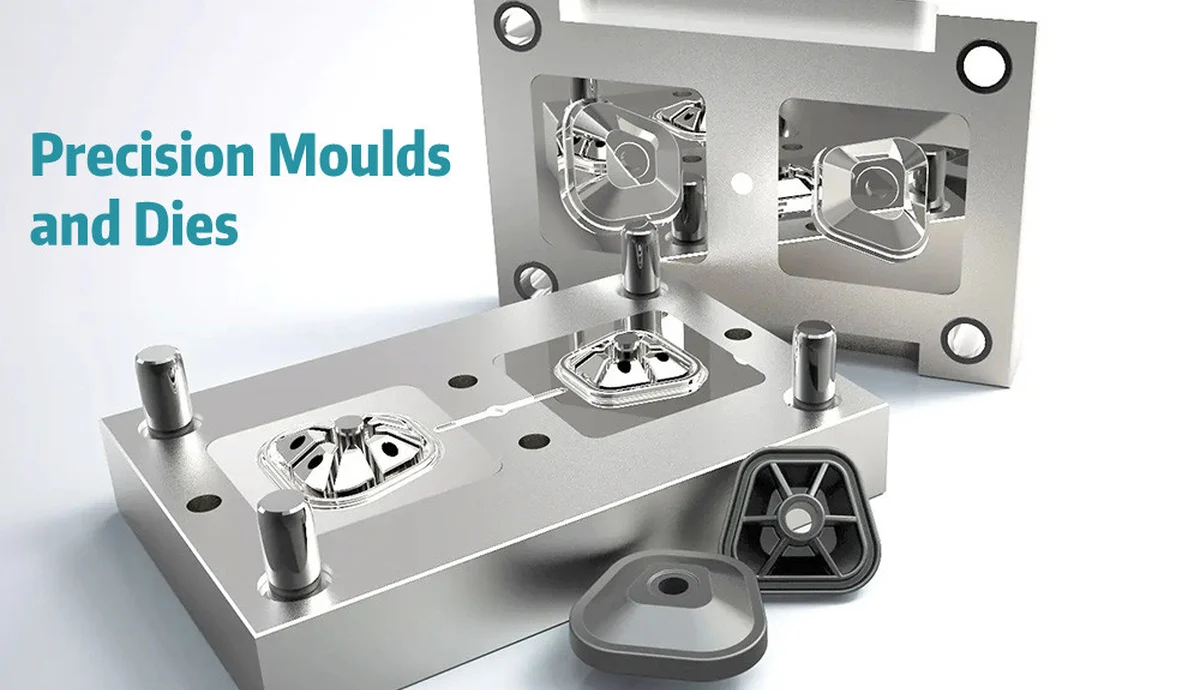
Single-cavity, multi-cavity, and family injection molds differ fundamentally in how many parts they produce per machine cycle, how molten resin distributes through the runner network, and how easily they absorb engineering changes. A single-cavity tool cuts one impression per shot; a multi-cavity tool cuts two or more identical impressions (commonly 2, 4, 8, 16, or 32+) per shot; and a family mold combines two or more different part geometries—such as a left housing, right housing, and battery cover—inside a single mold base. Comparing their financial and technical trade-offs side by side clarifies which architecture fits your production stage.
| Tooling Parameter | Single-Cavity Mold | Multi-Cavity Mold (Identical Parts) | Family Mold (Distinct Mated Parts) |
|---|---|---|---|
| Output per Shot | 1 part per injection cycle | 2, 4, 8, 16, or 32+ identical parts per cycle | 1 matched set of 2 to 6+ distinct parts per cycle |
| Upfront Tooling Investment | Lowest (fastest payback on low volume) | High to very high (scales with cavity count and runner complexity) | Medium to high (lower than building 2-4 separate single-cavity molds) |
| Piece Price at Production Scale | Highest (100% of machine hourly rate borne by one part) | Lowest (machine cycle cost divided across all cavities) | Moderate (cycle time governed by the thickest part in the set) |
| Tooling Lead Time | Shortest (typically 3 to 5 weeks) | Longer (typically 5 to 10+ weeks depending on cavities & hot runner) | Moderate to long (extra DFM flow-balancing and trial tuning) |
| Engineering Change (ECO) Risk | Lowest (modify only one core/cavity insert) | High (every design revision must be replicated across all cavities) | Moderate to high (altering one part can upset flow balance for others) |
| Process & Flow Balancing Difficulty | Lowest (single flow path, widest process window) | Moderate to high (requires symmetric runner & thermal balance) | Highest (different part volumes and wall thicknesses compete for pressure) |
| Typical Annual Volume Fit | 500 to 15,000 parts/year, NPI pilots, or large structural parts | 30,000 to millions of identical parts/year | 3,000 to 50,000 matched assembly sets/year in identical resin & color |
Before finalizing cavity layout, every tooling decision should connect directly to mold-steel selection, gating style, and total project cost drivers. For deeper background on those linked choices, review our 12-question injection mold buying guide and our breakdown of 8 factors that drive injection mold cost.
When is a single-cavity injection mold the smartest B2B tooling choice?
A single-cavity injection mold is the smartest tooling strategy whenever annual demand is modest, part dimensions are large, tolerances are ultra-tight, or product geometry is still evolving after initial customer feedback. Because molten polymer flows along one direct path from the machine nozzle to a single gate and cavity, a single-cavity mold offers the widest, most forgiving molding process window of any tooling architecture. Every injection pressure, packing profile, and cooling-channel setting is tuned exclusively for that one part rather than compromised across multiple impressions.
At DJmolding, we recommend single-cavity tooling in four specific commercial scenarios:
- New Product Introductions (NPI) and bridge validation: Cutting a single-cavity P20 or NAK80 validation mold gets real injection-molded parts into functional testing, regulatory approval, and early customer hands in 3 to 5 weeks. If field feedback triggers a rib adjustment, snap-fit tweak, or wall-thickness change, revising one cavity costs a fraction of reworking an 8-cavity hardened production tool.
- Large structural or heavy-wall components: Housings, automotive trim panels, or industrial covers with large projected areas often require 350-ton to 1,000-ton presses even in a 1-cavity configuration. Adding a second cavity would force an uneconomical jump to an oversized press with dramatically higher hourly rates.
- Complex side-actions and precision micro-tolerances: Parts requiring four-way hydraulic slides, unscrewing cores, or tight +/-0.02 mm medical and electronic dimensions maintain much higher capability indices (Cpk >= 1.67) in a single-cavity or 2-cavity tool than in high-cavitation layouts where mold-plate deflection introduces variation.
- Low-volume and spare-parts production: When annual demand sits below 5,000 to 10,000 units, the capital saved on single-cavity tooling easily outweighs the slightly higher per-part press cost—a model we support through our low-volume injection molding service and our bridge tooling guide.
How do multi-cavity molds lower unit cost and what engineering traps must you avoid?
A multi-cavity injection mold lowers per-part manufacturing cost by dividing press hourly rate, operator labor, and cycle time across 2, 4, 8, 16, or 32+ identical impressions in every single shot. For example, if a 30-second cycle on a 160-ton press runs at $45 per hour (120 shots per hour), a single-cavity mold produces 120 parts per hour at $0.375 in machine conversion cost per part, whereas an 8-cavity mold on a 250-ton press at $60 per hour produces 960 parts per hour at $0.0625 per part—cutting conversion cost by more than 80% before resin weight. When annual volumes exceed 50,000 to 100,000 units, multi-cavity production quickly pays back the higher upfront mold investment.
However, many B2B buyers underestimate three engineering traps that separate a reliable multi-cavity production tool from a high-scrap headache:
1. Geometric symmetry is not enough—shear-induced filling imbalance
Most introductory articles state that a geometrically balanced “H-pattern” cold runner guarantees identical filling across all 8 or 16 cavities. In real polymer processing, molten resin shearing along runner walls creates a hotter, lower-viscosity outer laminate and a cooler core; when that stream splits at a T-junction, the hotter melt consistently flows preferentially into the inner cavities while the cooler melt travels to the outer cavities. Without Moldflow simulation, runner-diameter tuning, melt-flipper rotation inserts, or an individually heated hot-runner manifold, inner cavities overpack and flash while outer cavities underpack and shrink out of tolerance.
2. Clamping-force jumps and press-class cost cliffs
Every added cavity increases total projected area on the mold parting line, and cold runners add even more projected area than the parts themselves. Required clamping force is calculated as Total Projected Area multiplied by Average Cavity Pressure (typically 2 to 5 tons per square inch depending on resin viscosity and wall thickness) plus a 10% to 15% safety margin. If stepping from 4 cavities to 8 cavities pushes required clamping force from 140 tons to 290 tons, the job jumps into a larger press class with higher hourly rates and longer setup times—sometimes eroding the expected piece-price savings unless a compact hot runner is used to eliminate runner projected area.
3. Mold-steel longevity and conformal cooling uniformity
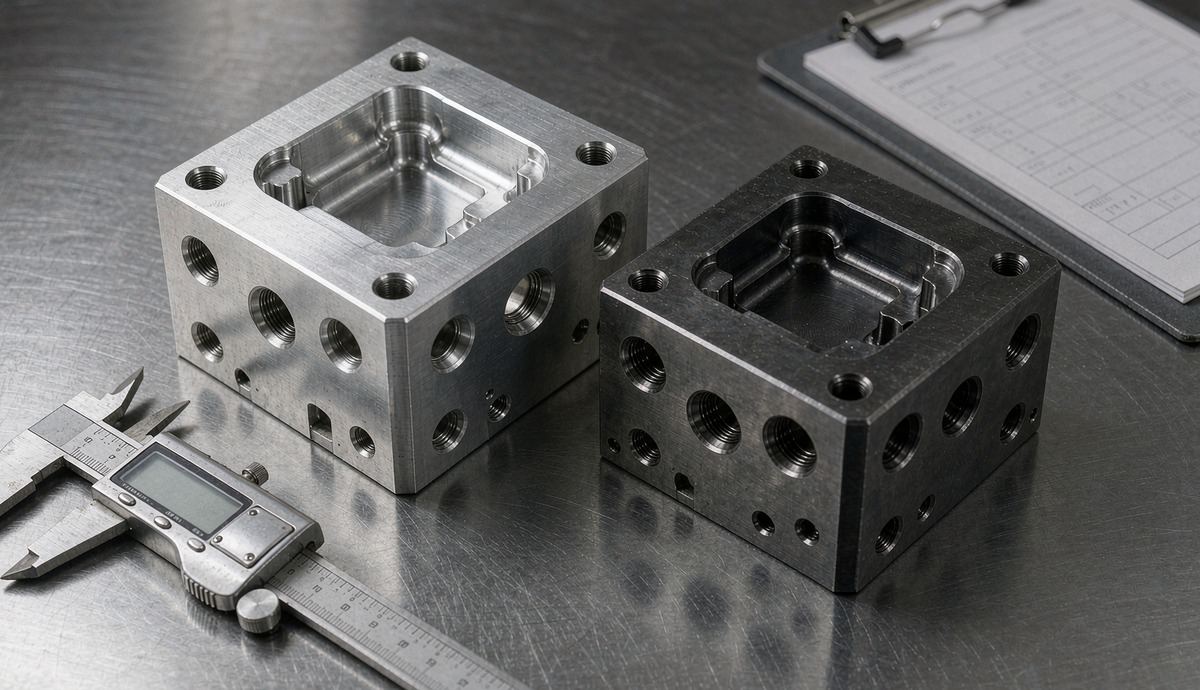
High-cavitation molds run hundreds of thousands to millions of cycles, making mold-steel hardness and cooling symmetry critical. Cutting an 8-cavity glass-filled nylon tool in soft P20 steel leads to rapid gate erosion and cavity-to-cavity dimensional drift within 80,000 shots. For high-volume multi-cavity programs, we specify hardened H13 or corrosion-resistant S136 tool steels paired with balanced, turbulent-flow cooling circuits dedicated symmetrically to every cavity; see our P20 vs. H13 vs. S136 vs. NAK80 mold steel selection guide and our high-volume injection molding capabilities.
When does a family mold save money—and when does it backfire?
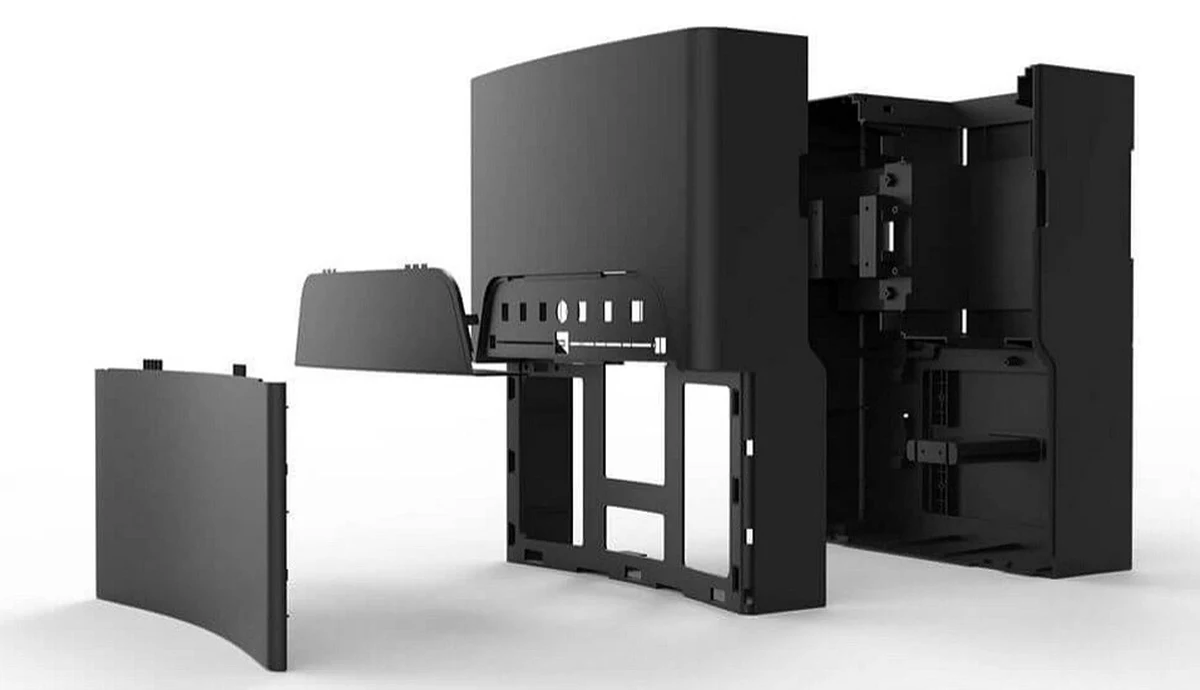
A family mold saves significant upfront capital by combining two or more distinct components of the same assembly into a single mold base, eliminating duplicate mold bases, clamping setups, and material purges. Beyond tooling savings, molding mating parts—such as an upper and lower electronic enclosure shell—in the exact same shot guarantees identical resin lot, color dispersion, and moisture history, which reduces visible color mismatch and snap-fit assembly variation between mated components. You can see practical examples of paired-component builds on our family injection molds service page.
In our engineering reviews at DJmolding, a family mold succeeds only when five strict technical conditions are met simultaneously:
- Identical resin grade and color: Every part in the family mold must use the exact same thermoplastic resin, glass-fill percentage, and masterbatch colorant.
- Matched consumption ratio: Your bill of materials must consume the parts in the exact ratio built into the mold (typically 1:1, or 1:2 if you cut one cavity of Part A and two cavities of Part B). If field replacements require extra lids without extra bases, a fixed family mold forces unwanted excess inventory unless mechanical runner shut-off plugs are designed into the tool.
- Compatible part volume and wall thickness: Ideally, the largest and smallest parts in a family mold should stay within roughly a 2:1 to 3:1 volume ratio and share similar nominal wall thickness. Pairing a tiny 2-gram clip with a heavy 60-gram thick-walled housing forces the tiny clip to wait through the large housing’s cooling time while risking severe overpacking and flash on the clip.
- Engineered artificial runner balancing or sequential valve gating: Because distinct cavities have different flow lengths and volumes, our mold engineers intentionally size each branch runner diameter and gate land—validated through Moldflow fill analysis—or install sequential hot-runner valve gates so every cavity reaches 98% fill at the exact same millisecond.
- Independent ejection balance: Distinct geometries have different draft angles and core-cling forces; a robust family mold spaces ejector pins proportionally around each cavity so the ejection plate never cocks or marks cosmetic surfaces.
When parts differ sharply in resin type, surface finish (for example, optical clear lens versus textured black bracket), or annual demand forecast, building separate single-cavity or 2-cavity molds—or sharing a common Master Unit Die (MUD) frame with interchangeable inserts—delivers far lower lifecycle risk than forcing mismatched parts into one family mold.
How do you calculate the break-even volume across single-cavity, multi-cavity, and family molds?
Selecting the most economical cavity strategy requires calculating total landed program cost—upfront tooling cost plus total piece price across your realistic 2- to 3-year production forecast—rather than comparing tooling quotes or piece prices in isolation. The break-even volume between any two tooling options is simply the difference in upfront tooling investment divided by the per-part cost savings:
Break-Even Volume (units) = (Tooling Cost B – Tooling Cost A) / (Piece Price A – Piece Price B)
Consider a real-world B2B example for a mid-sized ABS industrial sensor housing (25 grams per part) projected to run 60,000 units over two years:
| Cost Component | Option A: 1-Cavity Cold Runner | Option B: 4-Cavity Cold Runner | Option C: 4-Cavity Hot Runner |
|---|---|---|---|
| Upfront Tooling Cost | $6,500 | $14,500 | $21,500 |
| Press Tonnage / Cycle Time | 90-ton / 28 seconds | 180-ton / 30 seconds | 160-ton / 24 seconds |
| Resin + Runner Waste + Conversion Piece Price | $0.68 / part | $0.36 / part | $0.27 / part |
| Break-Even vs. Option A | Baseline | 25,000 parts | 36,585 parts |
| Total Program Cost at 15,000 Units | $16,700 (Lowest) | $19,900 | $25,550 |
| Total Program Cost at 60,000 Units | $47,300 | $36,100 (Lowest) | $37,700 |
| Total Program Cost at 150,000 Units | $108,500 | $68,500 | $62,000 (Lowest) |
Notice how clearly the break-even curve guides investment: at 15,000 total units, the single-cavity tool saves $3,200 to $8,850 over higher-cavitation options; at 60,000 units, the 4-cavity cold-runner tool wins on total program cost; and once cumulative volume crosses ~78,000 units (the break-even between Option B and Option C), the 4-cavity hot-runner tool overtakes both by eliminating cold-runner scrap and shaving 6 seconds off every cycle. For a full comparison of runner economics and resin-waste payback, read our guide to hot runner vs. cold runner in injection mold design.
How do hot runners, valve gates, and modular inserts expand your tooling strategy?
Modern tooling engineering does not force B2B buyers into an all-or-nothing choice between cheap single-cavity molds and rigid high-cavitation tools. Three advanced tooling configurations—hot-runner manifolds, sequential valve gates, and interchangeable modular inserts—allow our engineers at DJmolding to solve the classic weaknesses of multi-cavity and family molds:
- Hot-runner manifolds for expensive engineering resins: When molding high-cost polymers such as PEEK, PPS, PEI, or medical-grade polycarbonate, cold-runner sprues and runners can represent 15% to 40% of shot weight—and regulatory rules often prohibit regrind. Switching a 4-cavity or 8-cavity tool to a heated hot runner cuts resin waste to zero and lowers clamping-tonnage demand.
- Pneumatic or hydraulic valve gates for family and cosmetic molds: Valve-gated hot runners use precision mechanical pins to open and close each gate independently. On a family mold, sequential valve gating lets the larger cavity fill first before opening the smaller cavity’s gate—eliminating overpacking, flash, and unsightly gate vestiges on Class-A cosmetic enclosures.
- Interchangeable cavity inserts and runner shut-offs: For product families with slight regional variations (such as different connector cutouts, logo plates, or voltage markings), we design quick-change cavity inserts inside a single master mold base. Similarly, adding rotary runner shut-off plugs to a family mold allows operators to block off Cavity B temporarily when you only need extra replenishment stock of Cavity A.
How do we validate cavity balance and dimensional tolerances during T1/T2 mold trials?
A multi-cavity or family mold is only production-ready after every individual cavity proves identical filling behavior and stable dimensional capability under real press conditions. During T1 and T2 sampling at DJmolding, our process engineers follow a structured scientific-molding qualification protocol before shipping parts for customer approval:
- Short-shot cavity balance progression: We mold progressive short shots at 50%, 75%, 90%, and 98% fill with packing pressure turned off, then weigh each cavity’s part to 0.01 grams. A properly balanced multi-cavity or family mold shows less than 1% to 2% weight variance across cavities at 95% fill before pack-and-hold begins.
- Engraved cavity identification numbers: Every cavity in a multi-cavity mold receives a subtle engraved ID (`1, 2, 3, 4…`) in a hidden non-cosmetic area so coordinate measuring machine (CMM) reports and incoming quality inspections can trace any dimensional shift back to the exact steel insert immediately.
- Per-cavity CMM inspection and Cpk verification: Instead of averaging measurements across random parts from a bin, we measure critical-to-quality (CTQ) dimensions separately for each cavity across a 30-shot run to confirm that both individual-cavity Cpk and combined all-cavity Ppk meet drawing tolerances.
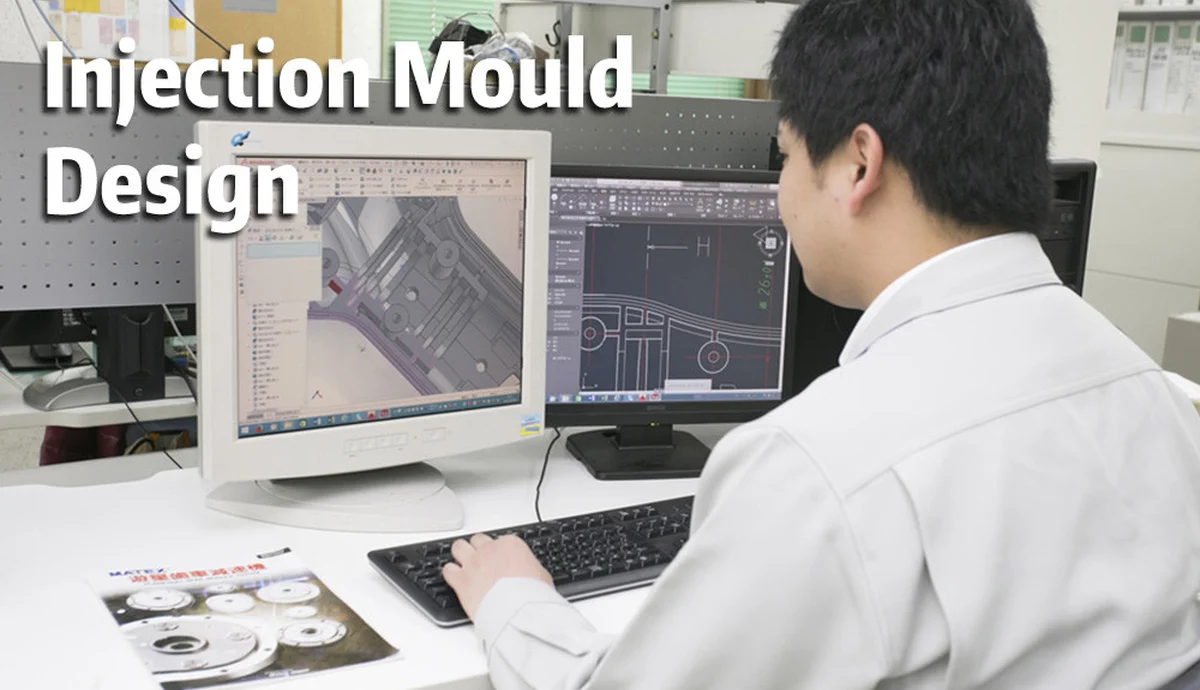
- Gate-freeze and cooling-stability verification: We run a gate-seal weight study and thermal-imaging check on ejected parts across every cavity to verify uniform cooling and prevent post-molding warpage—pairing directly with our injection molding DFM rules and in-house mold design workflow.
Frequently asked questions about single-cavity, multi-cavity, and family molds
Should a new product launch start with a single-cavity mold or go straight to a multi-cavity mold?
Most new product introductions should start with a single-cavity (or 2-cavity) validation mold unless the geometry is already market-proven and annual demand above 100,000 units is contractually locked in. Starting with a single-cavity tool verifies real polymer shrinkage, assembly fit, and market demand at minimal capital risk, and the data gathered during single-cavity production makes the subsequent 4- or 8-cavity production mold faster and more accurate to build.
Can a family mold produce parts with different wall thicknesses?
A family mold can accommodate minor wall-thickness differences—typically within 20% to 30%—when our engineers apply Moldflow-verified artificial runner balancing and tailored gate dimensions. However, pairing a very thin 1.0 mm part with a thick 4.0 mm part in the same family mold usually causes overpacking, flash, or warpage on the thin part while extending cycle time unnecessarily; in that case, separate tools or a modular insert system is more reliable.
Can I shut off one cavity in a family mold if I only need one of the parts?
Yes, a family mold can run selectively if mechanical runner shut-off plugs (or individual hot-runner valve gates) are engineered into the mold design before steel is cut. Attempting to run a cold-runner family mold with an unbalanced cavity plugged without compensating for clamping-force asymmetry can damage guide pins and flash remaining cavities, so always specify selective-run requirements during the DFM phase.
How does cavity count affect injection mold lead time?
Moving from a single-cavity mold to a 4- or 8-cavity mold typically adds 2 to 4 weeks to tooling lead time because CNC roughing, EDM electrode fabrication, hand polishing, cooling-line drilling, and hot-runner manifold assembly scale with the number of cavities. Adding time for a thorough Moldflow fill-balance study up front usually recovers that time by reducing T1-to-T2 rework loops.
What information do I need to get a side-by-side quote for single-cavity vs. multi-cavity vs. family molds?
To prepare an accurate side-by-side tooling and piece-price comparison, send us 3D STEP/IGES CAD files for every component, 2D drawings highlighting critical tolerances and cosmetic textures, your exact resin grade and color, estimated first-year and 3-year annual volumes, and whether mated parts are consumed in a fixed 1:1 ratio.
Plan your custom injection mold strategy with DJmolding
At DJmolding, our mold-design engineers, precision CNC/EDM toolmakers, and scientific-molding production teams work directly with B2B OEMs, product developers, and industrial buyers to engineer single-cavity, multi-cavity, and family molds tailored to your exact volume curve and tolerance targets. From upfront Moldflow fill-balance analysis and DFM optimization to T1/T2 cavity-balance qualification and scalable serial production, we help you avoid costly tooling rewrites and achieve the lowest total landed part cost.
Explore our tooling capabilities on our injection mold design page and our family injection molds overview, or compare our low-volume and high-volume injection molding services. Ready to compare single-cavity, multi-cavity, and family mold quotes side by side? Upload your 3D CAD files, target resin, and annual volume forecast today for a complimentary DFM review and B2B tooling quotation. Contact DJmolding to discuss your injection molding project.
