

Top 10 Low-Volume Injection Molding Companies in 2027
The best low-volume injection molding company in 2027 depends on the part, production batch, tooling strategy, and inspection burden. This ten-company shortlist covers direct molders and integrated manufacturing providers that publicly describe prototype, short-run, or bridge-production services. It is a buyer’s comparison, not a verified ranking of quality, price, or 2027 delivery performance. Request a project-specific quote and confirm current capacity before awarding a tool.
Estimated reading time: 13 minutes.
Low-volume injection molding makes real thermoplastic parts in quantities below the economics of a dedicated high-output program. There is no universal cutoff: one supplier calls a few dozen pieces low volume, while another considers thousands per run or tens of thousands annually. The useful definition specifies an initial release, annual demand, lifetime volume, and the number of design revisions. A supplier that is ideal for 50 validation parts may be expensive or poorly configured for 5,000 recurring parts.
How was this 2027 shortlist selected?
The companies below were selected because their published services describe injection molding for prototype, low-volume, or bridge work, and because their models offer different procurement choices. The review groups providers by practical fit: fast digital quoting, direct tooling and molding, offshore pilot production, or repeated small batches. Public capability pages were checked in November 2026; 2027 pricing, queue time, tool life, and certifications remain subject to confirmation in a current quotation.
Ten names do not imply ten interchangeable factories. Some firms mold in their own facilities, while others may use a managed network, overseas location, or multiple production paths. Buyers should ask where the mold is built, where parts are molded, who owns the tool, and who signs off on inspection. The distinction matters more than a generic claim of fast turnaround.
| Company | Publicly described fit | First question for the RFQ |
|---|---|---|
| DJmolding | China-based custom tooling and low-volume parts | Which tool and inspection plan fits the forecast? |
| Protolabs | Digital quoting and aluminum-tool routes | Which molding service option will make the parts? |
| Xcentric | Direct rapid tooling and molding | What is the approved tool-life and revision plan? |
| Quickparts | Quick-turn and bridge molding options | Which tool path matches the resin and geometry? |
| Fathom | Bridge runs with multiple sourcing paths | Where will tooling and molding occur? |
| RapidDirect | China-based rapid tooling and low-volume service | What evidence covers T1 and volume ramp? |
| WayKen | Rapid tooling and on-demand molded parts | Can the chosen tool support later releases? |
| Seaway Plastics | Low-to-mid-volume programs | What quality and assembly scope is included? |
| RevPart | Very small short-run orders | What is the tooling cost despite a small MOQ? |
| Midwest Mold | Repeated low-volume tooling and molding | How are first shots approved and repeat lots scheduled? |
Which ten companies merit a project-specific quote?
1. DJmolding – integrated China sourcing for low-volume plastic parts
DJmolding describes custom injection mold design, tooling, low-volume molding, and subsequent production in China. A buyer seeking one engineering conversation from DFM review through trial parts and repeat orders may find that integrated scope useful. Its suitability depends on the actual part geometry, required material, shipping destination, inspection documentation, and timing; a website capability statement does not establish that every project is feasible.
Ask DJmolding to separate mold cost, T1 samples, design changes, production unit price, inspection, packaging, and freight. For an international program, specify the tool’s storage and ownership terms and whether the proposed tool can later be exported or moved. Its low-volume injection molding service is the relevant starting point for a B2B RFQ.
2. Protolabs – digital route for prototype and on-demand production
Protolabs publicly offers different injection molding options for prototypes and low-volume end-use parts, including aluminum tooling routes. That choice suits engineering teams that value early DFM feedback and an online quoting workflow. A buyer should select the specific service option rather than assume that one quote’s tooling terms, quantities, or delivery schedule apply to another option.
For a recurring program, ask what changes trigger new tooling, how the mold is maintained, and which inspection deliverables accompany production. A fast first shipment can be attractive, but the economic comparison should also include subsequent releases and the lifetime forecast.
3. Xcentric – direct rapid mold building and molding
Xcentric describes in-house mold design, tool building, and injection molding in U.S. facilities, including prototype and lower-volume production. A direct-shop arrangement can simplify communication when a buyer needs rapid design iterations and a single accountable manufacturing route. Its published range is broad, so the quote should specify the intended number of shots and mold-life commitment for the actual resin and geometry.
For tight schedules, request separate dates for DFM approval, tool completion, T1 samples, any correction loop, and approved production. A first-article date is not the same as the date of accepted saleable inventory.
4. Quickparts – multiple low-volume molding routes
Quickparts describes quick-turn injection molding and bridge-to-production services, which can suit teams comparing a fast validation tool with a longer-lived production path. The buyer should define whether the goal is functional samples, a market launch batch, or repeated end-use parts. Each goal can require a different tool material, cavity design, resin qualification, and validation level.
Ask Quickparts whether the quoted schedule includes sample inspection and engineering changes. A low initial tool price is useful only if the tool can deliver the specified material, finish, and acceptable parts through the intended release schedule.
5. Fathom – bridge production with route-specific tooling
Fathom describes bridge manufacturing and injection molding through multiple routes, including steel tooling associated with its overseas option. This breadth can help a buyer whose immediate pilot lot must transition to later production. It also makes route disclosure essential: the location, tool specification, documentation, and owner of production responsibility should be explicit on the quotation.
Compare Fathom’s proposed bridge tool against the forecast rather than assuming a steel tool is always preferable to aluminum. Geometry, resin abrasiveness, cycles, lead time, and transfer conditions jointly determine the tool’s value.
6. RapidDirect – rapid tooling plus scalable molding
RapidDirect publishes a dedicated low-volume injection molding service and describes DFM, tooling, T1 validation, and broader production capabilities. This model may suit a buyer combining pilot parts with a later volume ramp. The practical test is whether the same design control and inspection criteria continue when the tool or production process changes.
Ask for tool steel or aluminum grade, cavity count, expected tool life, sample quantity, and a timeline broken into tool build, T1, corrections, and production. Clarify whether the pilot tool is retained, replaced, or transferred if demand increases.
7. WayKen – rapid tooling for small molded batches
WayKen describes rapid tooling paired with injection molding and broader low-volume manufacturing services. That flexibility can help product teams still deciding whether to machine, cast, or injection mold a design. The buyer should verify that the quoted deliverable is actually injection molded in the intended resin, especially when different processes are offered by the same provider.
Request molded sample evidence, dimensional results, tool construction, and a clear route for repeat releases. A visual prototype from a substitute process cannot validate shrinkage, weld lines, or molded mechanical behavior.
8. Seaway Plastics – low-to-mid-volume programs
Seaway Plastics explicitly positions its service around low-to-mid-volume injection molding, with tooling and additional manufacturing services. This can fit a regulated or assembly-intensive part that requires more than a fast mold. The right comparison includes inspection, traceability, finishing, assembly, and program support rather than treating the piece price as the entire contract.
Confirm the exact facility and quality requirements for the project, then ask whether quoted validation and reporting are included or separately priced. Do not infer a particular certification applies to every location and product without current evidence.
9. RevPart – short runs with a very small initial order
RevPart advertises short-run injection molding without a fixed minimum order quantity. This may help a buyer who needs a small batch of molded parts for engineering or market validation. A low or zero part MOQ does not erase the nonrecurring cost of a custom mold, so compare total spend at the initial release and at a plausible repeat order.
Ask RevPart to document the selected mold construction and warranted shot count. Published explanations of prototype tooling can change over time; the current quote and approved tool design should govern the order rather than a generic statement on a service page.
10. Midwest Mold – repeated low-volume releases
Midwest Mold describes a structured path from inquiry and design review to first shots and scheduled production runs for low-volume customers. That process suits programs in which tooling approval and repeated small releases matter more than a one-time prototype delivery. Buyers should compare the planning discipline, engineering response, and repeatability of accepted lots.
Ask Midwest Mold what the quote includes for mold-flow review, first-shot correction, sample inspection, and future release dates. A repeat-run program needs stable material, process settings, and tool maintenance records to prevent variation between small batches.
How should a buyer compare a ten-company shortlist fairly?
A fair comparison starts with one common RFQ package. Send the same released 3D CAD model and 2D drawing, resin grade, color, finish, critical dimensions, annual forecast, initial batch, lifetime demand, inspection plan, target destination, and schedule to each candidate. If one provider quotes a single-cavity aluminum tool and another quotes a hardened multi-cavity steel tool, their unit prices and lead times cannot be compared without normalizing the tool scope.
Ask every supplier for three separate milestones: approved DFM, first molded samples, and shipment of accepted parts. The shortest quoted “tool lead time” may exclude corrections after T1. A realistic plan reserves time for a dimensional report, functional test, design disposition, and any re-sampling. The site’s injection mold buying checklist gives additional questions on tool terms.
| Comparison field | Ask for | Why it changes the decision |
|---|---|---|
| Tooling | Material, cavities, life assumption, ownership | Defines capital risk and future flexibility |
| Parts | Price at three batch sizes and resin basis | Shows sensitivity to growth or delay |
| Schedule | DFM, T1, correction, acceptance, shipment dates | Prevents first shots being confused with delivery |
| Quality | Critical dimensions, FAI, control plan, traceability | Sets a measurable acceptance standard |
| Logistics | Incoterm, packaging, freight, duty responsibility | Clarifies landed cost and delivery risk |
What is the right tool for a low-volume order?
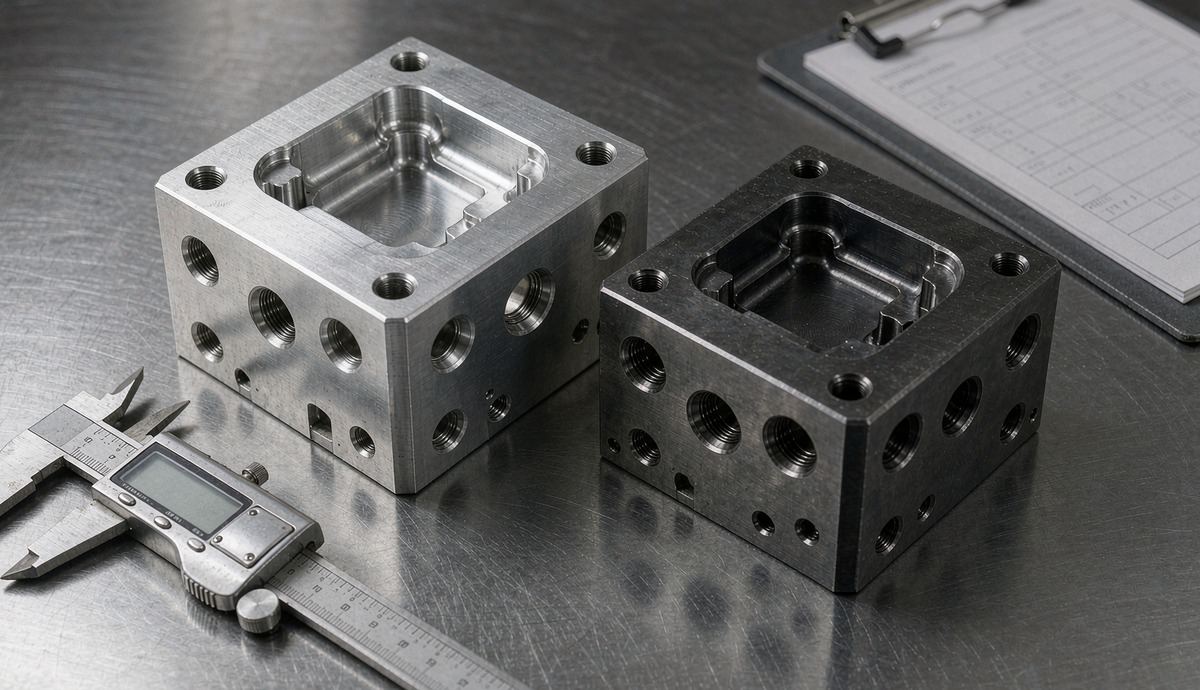
Aluminum, pre-hardened steel, and hardened steel tools occupy different positions on cost, lead time, maintainability, and expected cycles. The material name does not prove a tool’s life. A simple part in a nonabrasive resin may be practical in an aluminum bridge tool, while glass-filled resin, complex actions, aggressive textures, or frequent production can justify a more robust design. Ask the toolmaker to state the assumption and any warranty in shots, not just a material label.
Tool ownership must be contractual. Confirm who pays for the mold, who owns cavities and CAD data, where the tool is stored, whether a buyer can move it, and what export preparation or transfer charges apply. A “customer-owned” tool can still be designed around one machine or mold base that is difficult to transfer. Require a tool bill of materials, maintenance history, and transfer package if portability matters.
For a bridge program, compare two scenarios: a short-life tool followed by a production tool, and a more capable initial tool that can run through the forecast. Total cost includes second-tool design, duplicate validation, downtime, and inventory buffer. The break-even point varies by geometry, resin, run frequency, and expected demand. The site’s soft versus hard tooling guide provides the underlying tradeoffs.
How can a buyer estimate total cost at 100, 1,000, and 10,000 parts?
Compare total landed cost at each release quantity: nonrecurring engineering and tool charges, sample and inspection fees, accepted unit price, scrap allowance, packaging, freight, and any duty or tax responsibility. Divide the sum by accepted parts only when a per-unit comparison is helpful. This avoids the misleading result in which a cheap piece price hides an expensive tool or a low mold quote hides repeated setup charges.
For example, two hypothetical bids may have tool prices of $8,000 and $15,000, with unit prices of $4 and $2. At 1,000 accepted parts, excluding all other costs, the totals are $12,000 and $17,000. At 10,000 parts, they become $48,000 and $35,000. The numbers are an arithmetic illustration, not market prices or supplier quotes. The lower initial tool wins the small run, while the lower unit price wins at higher volume.
Ask for tiered prices at the initial batch, annual forecast, and a plausible growth case. If the design is still changing, include engineering-change charges and the value of avoiding obsolete stock. For a fuller quote framework, see the injection molding cost guide.
What evidence should qualify the first molded parts?
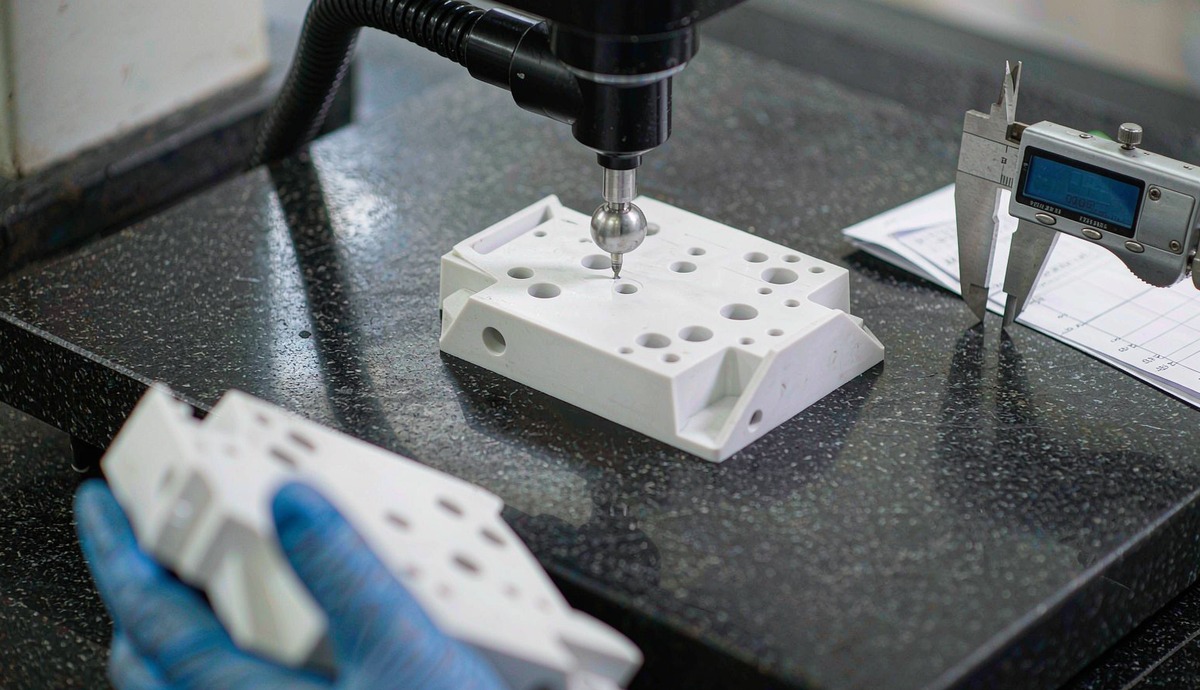
T1 samples should be molded in the specified production resin and color when the goal is to validate the finished material and process. Review the actual gate, parting line, ejector marks, sink, warp, weld lines, and surface finish. A functional fit check alone can miss critical dimensional variation. Specify which features require a first-article inspection report and what measurement method will be used.
Document the disposition of every deviation. A supplier may propose a tool correction, a process adjustment, or a drawing change; each has a different effect on future lots. The buyer should approve the final drawing revision and retained master sample before routine production. The DFM rules for ribs, bosses, draft, and wall thickness help identify features likely to drive the correction loop.
When is a network provider preferable to a direct molder?
A direct molder can offer a clear shop-level relationship and faster engineering feedback when a design needs hands-on changes. A network or multi-route provider may widen access to capacity, geography, and processes. Neither model guarantees better parts. For a network quote, ask who makes the mold, who runs production, whether subcontracting can change, and how quality issues reach the actual factory.
For a direct-shop quote, ask how the supplier handles machine downtime, overflow demand, special processes, and tooling transfer. A single site can simplify traceability, but it can also concentrate schedule risk. The right contract defines escalation, backup capacity, change notices, and records in a way proportionate to the project.
What should a 2027 low-volume RFQ contain?
Send a controlled CAD file and dimensioned drawing with revision number. State the exact resin grade or permitted alternatives, color standard, appearance surfaces, annual and lifetime quantities, release cadence, and forecast confidence. Identify any insert, overmold, assembly, labeling, or packaging work. Include the destination and target date for accepted parts, not just the date for initial samples.
State the acceptance package before quotation. Critical-to-function dimensions, cosmetic limits, material certificates, lot traceability, first-article inspection, capability data, and sector-specific requirements can significantly change scope and price. Do not assume a general company certification automatically covers the actual facility, process, or product. Request current evidence where required by the buyer’s market.
Ask for a written tool plan covering material, cavities, expected life, maintenance, storage, ownership, transfer, and engineering-change pricing. Request a schedule with decision gates and a quote that separates NRE, tooling, samples, molding, secondary operations, packaging, and freight. Two bids are comparable only after the same deliverables are included.
Frequently asked questions
Is 3D printing cheaper than injection molding for 100 parts?
It depends on geometry, material, tolerances, finish, and whether true molded properties are required. Printing avoids mold investment but may carry a higher unit cost or different material behavior. Quote both processes against the same functional specification; do not substitute a printed prototype for a molded validation part without engineering approval.
Does no minimum order mean there is no tooling charge?
No. A supplier can accept a tiny part order while still charging for a custom mold, engineering, setup, and inspection. Ask for the total amount needed to receive accepted parts at the initial batch, then compare repeat-order economics separately.
Should a bridge mold use aluminum or steel?
Choose according to the design, resin, expected shots, correction risk, and schedule. Aluminum can reduce initial investment for suitable parts; steel may be justified for abrasive materials, complex geometry, or a longer program. An agreed tool-life assumption and transfer plan matter more than a generic rule.
How many companies should receive the same RFQ?
Three to five well-matched suppliers usually give a more useful comparison than ten incomplete quotes. Shortlist by part fit and required location, then send the same drawing, volume scenarios, inspection criteria, and contractual tool terms to each. The ten profiles above are candidates to screen, not an instruction to quote every provider.
Which supplier should a B2B buyer contact first?
A buyer needing a few urgent validation parts should first compare a rapid-tooling specialist with a digital quoting service. A buyer planning repeated small batches should prioritize documented tool ownership, production control, and unit economics across releases. A buyer requiring offshore sourcing should add logistics, sample acceptance, and transfer terms to the technical comparison. In every case, select a supplier against the same part specification rather than an unqualified list position.
DJmolding supports custom plastic injection molding, tooling, and low-volume production for B2B product developers and sourcing teams. To discuss your project, send a 3D model, drawings, resin, initial and annual quantities, target market, and acceptance requirements through the DJmolding contact page. Ask for a DFM review and an itemized tooling and parts quotation so your team can assess cost, sample approval, and the route to repeat production.
